

As a WDR member, this was a beautiful description, thank you Sarah ❤️










December 13th, 2025 | by Sarah Livingston
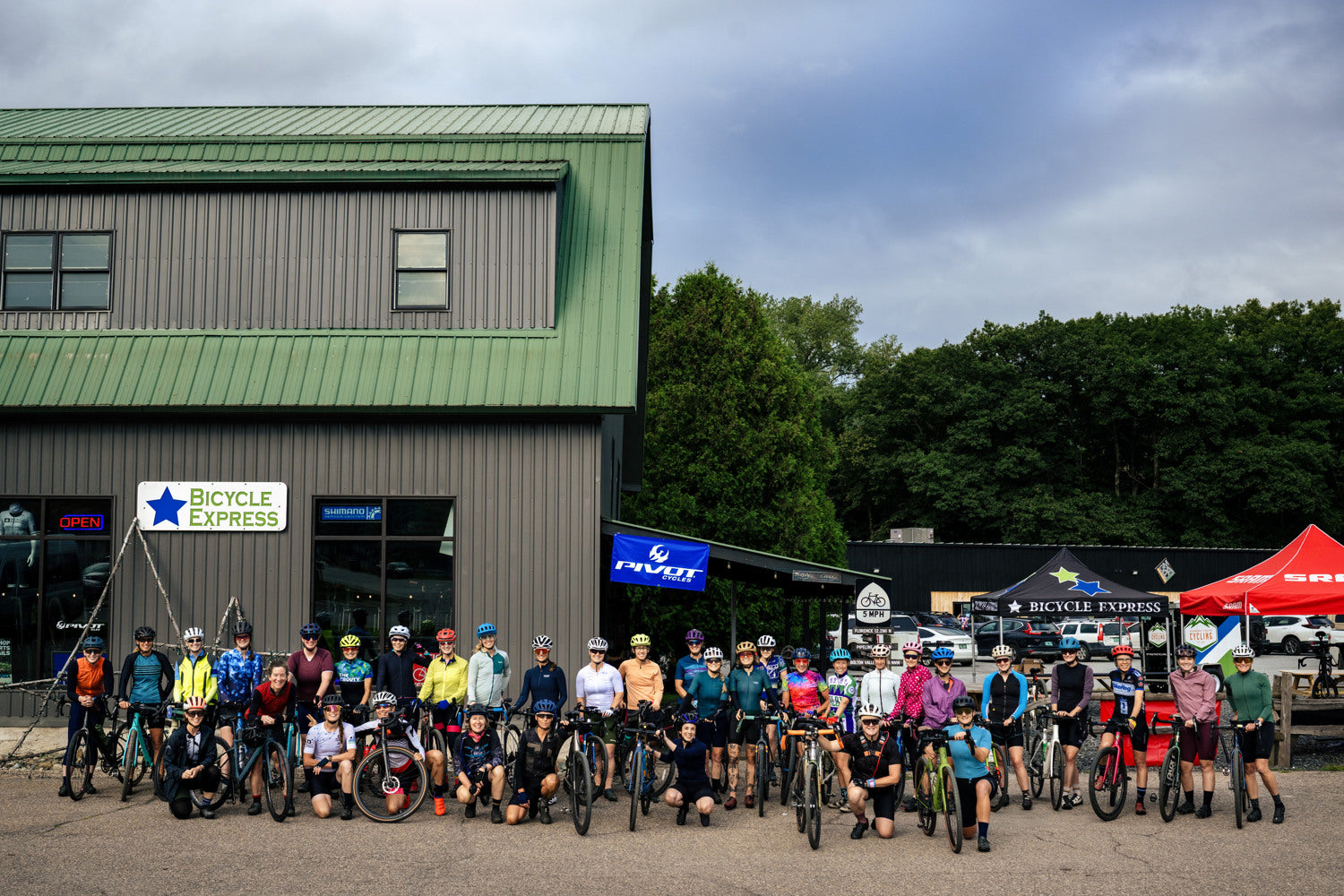
Recently, we connected with a local Women's Drop Ride Group in Vermont. Sarah Livingston and Liz Wolf were inspired to form this group after realizing there weren't many spaces for women to push themselves on the bike in a group training setting. There are countless "no drop rides" for women designed to keep everyone together but that's not what this is. This group is for pushing yourself and your capabilities. Instead of creating a culture of comparison, it has created a culture of support that the cycling space needed for women in Vermont.
Recently, we connected with a local Women's Drop Ride Group in Vermont. Sarah Livingston and Liz Wolf were inspired to form this group after realizing there weren't many spaces for women to push themselves on the bike in a group training setting. There are countless "no drop rides" for women designed to keep everyone together but that's not what this is. This group is for pushing yourself and your capabilities. Instead of creating a culture of comparison, it has created a culture of support that the cycling space needed for women in Vermont.
For the longest time, bikes revolved around play. I rode through family fields and farm roads in the woods, launching off questionably built jumps and chasing the next bit of adventure. Eventually, the bike became a symbol of independence — my first form of transportation before I could drive.
Leapfrog from 2003 to 2015, and that independence took on a new shape. High school and college had come and gone. I’d traveled around the country and found myself back in Vermont — married, settled, and stepping into adulthood.
For the longest time, bikes revolved around play. I rode through family fields and farm roads in the woods, launching off questionably built jumps and chasing the next bit of adventure. Eventually, the bike became a symbol of independence — my first form of transportation before I could drive.
Leapfrog from 2003 to 2015, and that independence took on a new shape. High school and college had come and gone. I’d traveled around the country and found myself back in Vermont — married, settled, and stepping into adulthood.
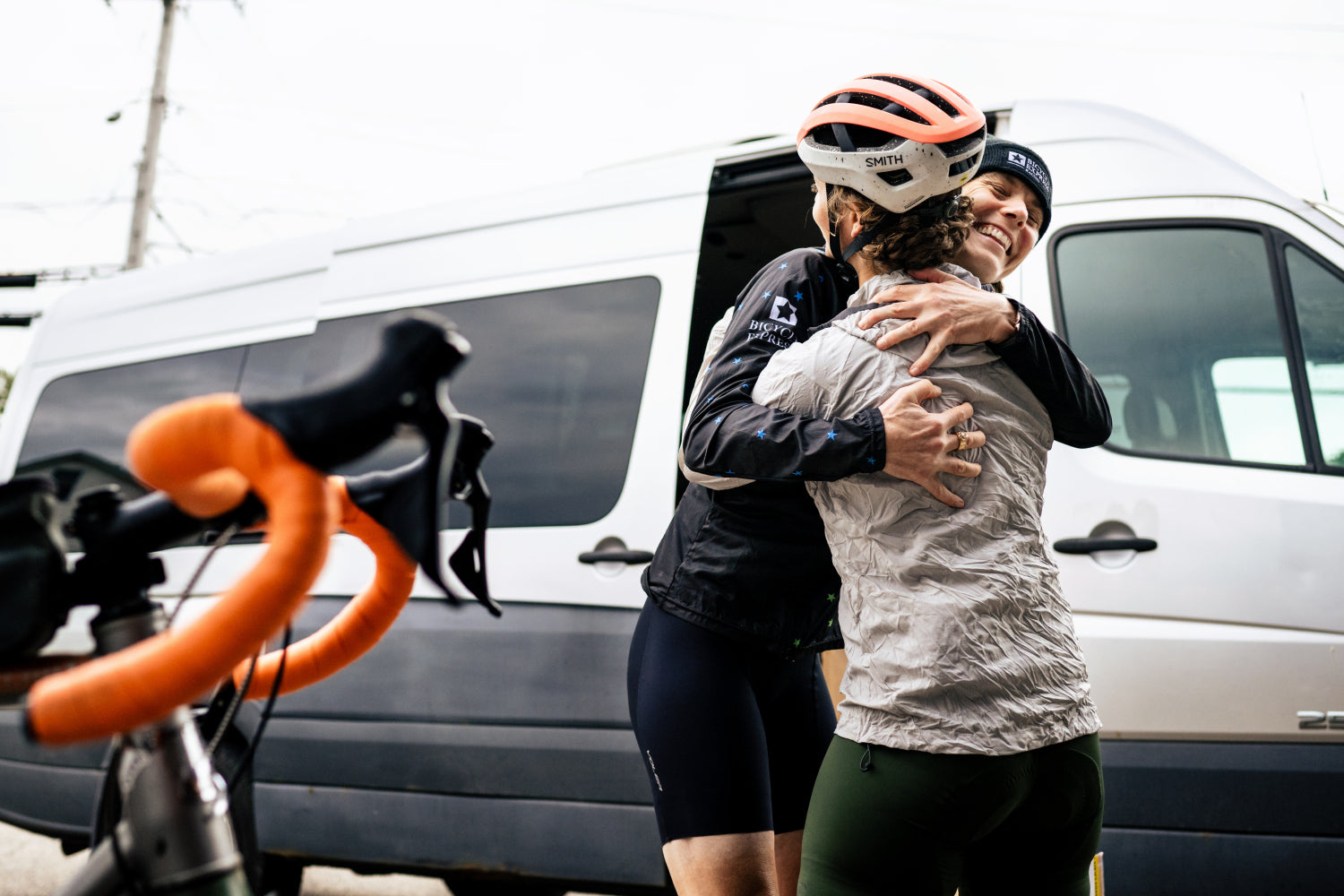
Life, of course, has a way of keeping you on your toes. The only constant is change. As my marriage began to fall apart, I found my way back to biking — this time, mountain biking — and it helped me pick up the pieces. It became my fast-paced meditation. Racing through singletrack, weaving between trees, offered moments of true presence. Ironic, really — everything around me was moving so fast, yet my mind found silence from the noise.
Short rides turned into long ones. Shoulder seasons arrived, and I started wondering how to stretch bike season just a bit further. Gravel riding was the natural next step.
A couple of years later, I met Liz Wolf through Strava. We had swapped a few QOMs on some “big, dumb” rides — and it was clear we both liked testing our limits. When she reached out about starting a women’s gravel drop ride, I was intrigued.
Just months earlier, I’d helped organize a Women’s Enduro Summit for advanced and intermediate riders because that space didn’t exist. Most women’s cycling events were beginner-focused or “no-drop,” and while those rides are important, there’s a huge gap between that and the elite level.
Life, of course, has a way of keeping you on your toes. The only constant is change. As my marriage began to fall apart, I found my way back to biking — this time, mountain biking — and it helped me pick up the pieces. It became my fast-paced meditation. Racing through singletrack, weaving between trees, offered moments of true presence. Ironic, really — everything around me was moving so fast, yet my mind found silence from the noise.
Short rides turned into long ones. Shoulder seasons arrived, and I started wondering how to stretch bike season just a bit further. Gravel riding was the natural next step.
A couple of years later, I met Liz Wolf through Strava. We had swapped a few QOMs on some “big, dumb” rides — and it was clear we both liked testing our limits. When she reached out about starting a women’s gravel drop ride, I was intrigued.
Just months earlier, I’d helped organize a Women’s Enduro Summit for advanced and intermediate riders because that space didn’t exist. Most women’s cycling events were beginner-focused or “no-drop,” and while those rides are important, there’s a huge gap between that and the elite level.
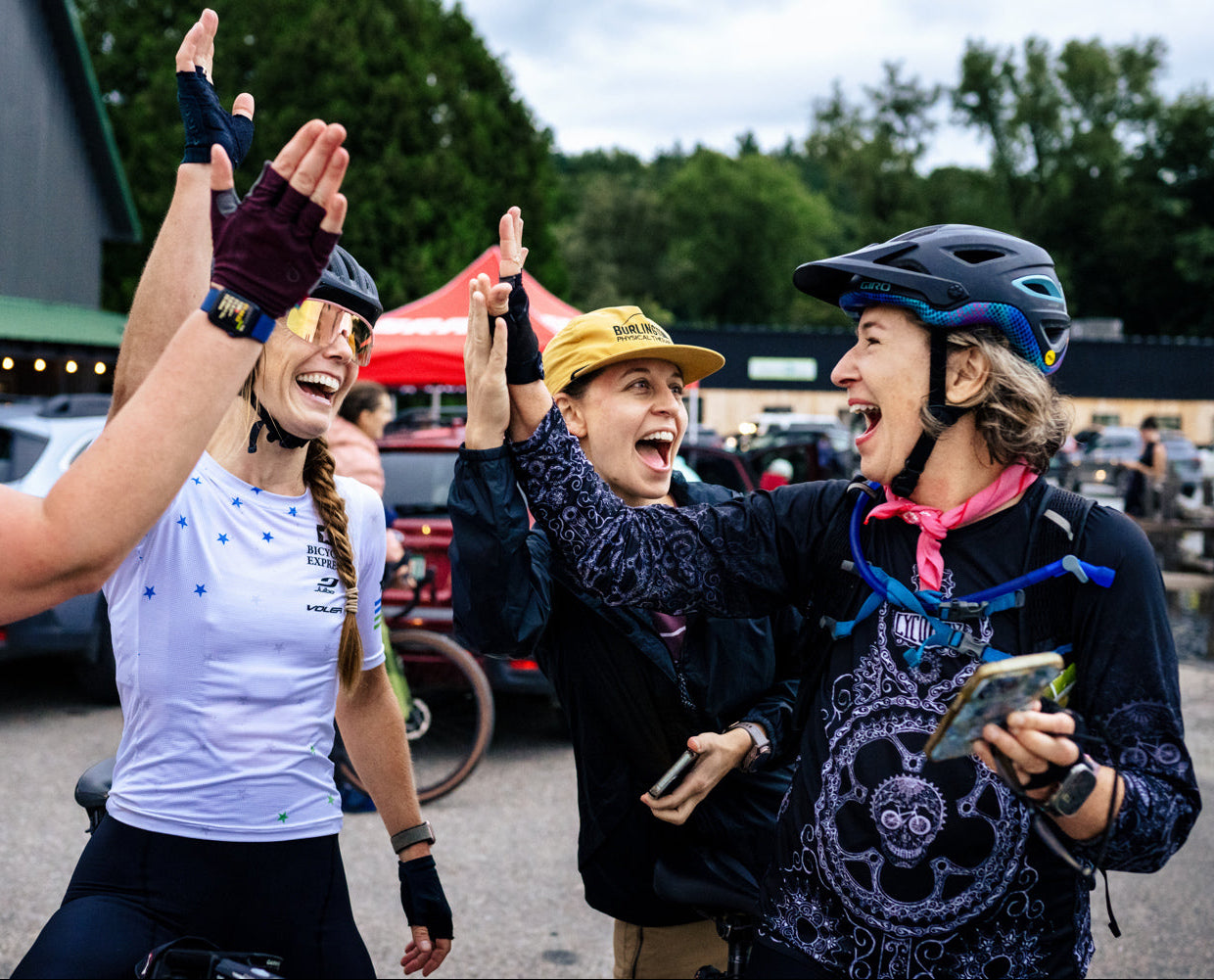

That’s why creating spaces like the Women’s Drop Ride matters so much. Cycling can be intimidating, competitive, or gatekept — especially for women who want to push their pace or try something new but aren’t at the elite level. Showing up to a ride where you know there’s a wide range of experience, no designated caboose, and no guaranteed “chill pace” requires guts. Sometimes your pace is the chill pace. Other times it’s not. Either way, it takes courage to put yourself in that mix.
WDR creates the middle ground: a place to show up as you are, be challenged, consider opportunities, and feel supported while doing it. Support shows up in so many forms — a tight and steady paceline, someone attacking a hill just to see who follows, or a group waiting at the end to give a new cyclist a high five for riding their version of hard.
That’s why creating spaces like the Women’s Drop Ride matters so much. Cycling can be intimidating, competitive, or gatekept — especially for women who want to push their pace or try something new but aren’t at the elite level. Showing up to a ride where you know there’s a wide range of experience, no designated caboose, and no guaranteed “chill pace” requires guts. Sometimes your pace is the chill pace. Other times it’s not. Either way, it takes courage to put yourself in that mix.
WDR creates the middle ground: a place to show up as you are, be challenged, consider opportunities, and feel supported while doing it. Support shows up in so many forms — a tight and steady paceline, someone attacking a hill just to see who follows, or a group waiting at the end to give a new cyclist a high five for riding their version of hard.
For me personally, coming back to WDR after having a baby, if I passed someone I’d hear, “Yeah, mama!” — not resentment, not comparison, just genuine excitement. Wholehearted support. That’s the culture.
For me personally, coming back to WDR after having a baby, if I passed someone I’d hear, “Yeah, mama!” — not resentment, not comparison, just genuine excitement. Wholehearted support. That’s the culture.
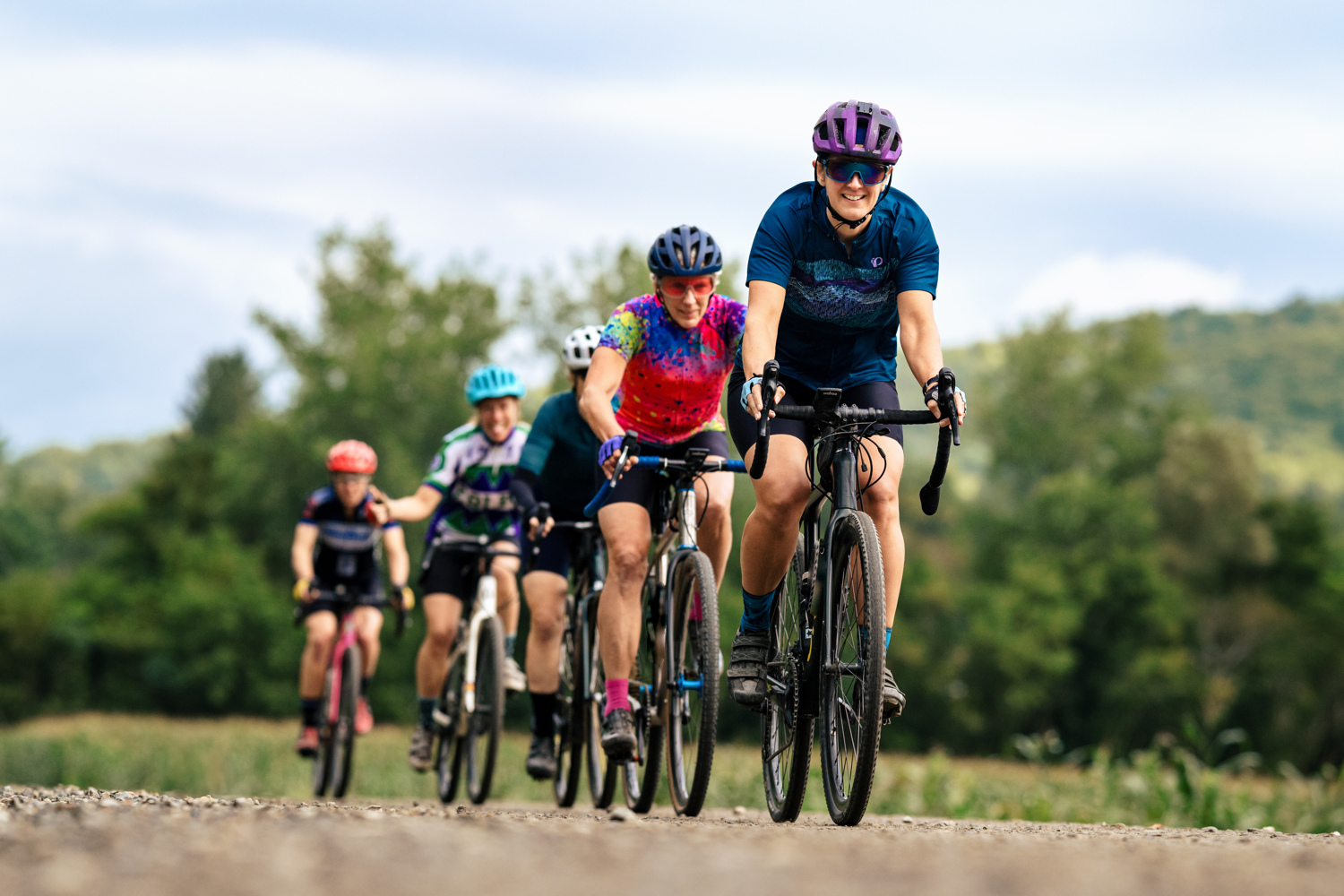


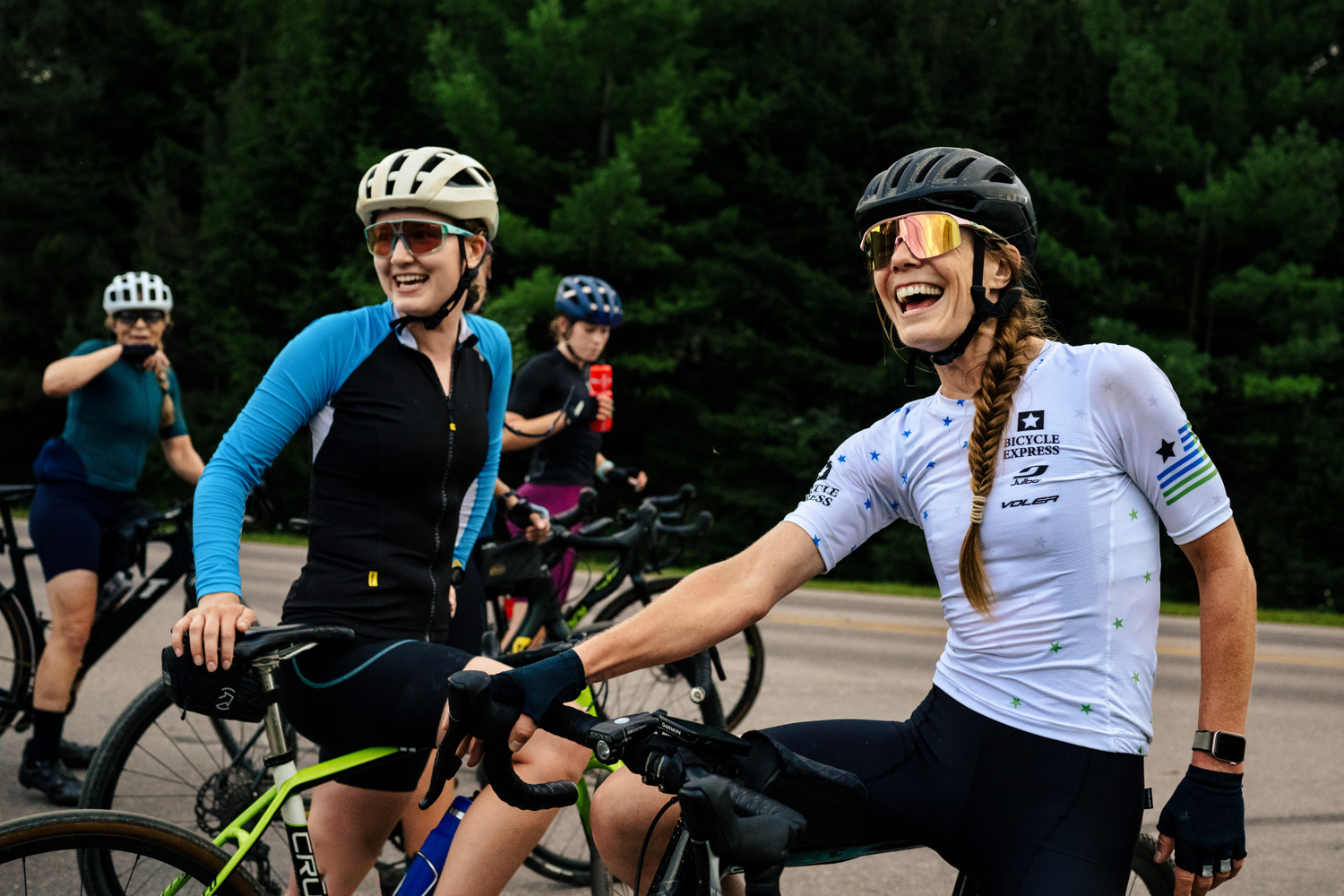

Everyone wants everyone else to do their best, push their edge, and conquer their own version of hard. That’s what makes this community rare — and why it’s worth protecting and growing. It opens the door to one of the best questions: What else can I do?
WDR is more than a weekly ride. It’s proof of what happens when women have a place where they feel supported, welcomed, and safe to push their pace, try something new, or simply belong.
The more I’ve been part of it, the more I realize how essential these communities are. They help women see what’s possible on the bike — and in themselves. That sense of “I can do hard things” doesn’t disappear once the ride ends — it carries into work, relationships, motherhood, and the everyday corners of life.
They remind us that strength and confidence grow faster when they’re shared. And they’re the quiet backbone of so many stories of women stepping into their power, one mile at a time.
By,
Sarah Livingston
Co-Founder of Women’s Drop Ride
Co-Founder of Burlington Physical Therapy
Everyone wants everyone else to do their best, push their edge, and conquer their own version of hard. That’s what makes this community rare — and why it’s worth protecting and growing. It opens the door to one of the best questions: What else can I do?
WDR is more than a weekly ride. It’s proof of what happens when women have a place where they feel supported, welcomed, and safe to push their pace, try something new, or simply belong.
The more I’ve been part of it, the more I realize how essential these communities are. They help women see what’s possible on the bike — and in themselves. That sense of “I can do hard things” doesn’t disappear once the ride ends — it carries into work, relationships, motherhood, and the everyday corners of life.
They remind us that strength and confidence grow faster when they’re shared. And they’re the quiet backbone of so many stories of women stepping into their power, one mile at a time.
By,
Sarah Livingston
Co-Founder of Women’s Drop Ride
Co-Founder of Burlington Physical Therapy

Kelly Lavallee
January 06, 2026
As a WDR member, this was a beautiful description, thank you Sarah ❤️




Keaton Smith
January 06, 2026
Hi Kelly! Thanks so much for reading the piece. We loved having Sarah tell the story of WDR :)