








April 18th | By Sunnie Devidas
Meet Sunnie and Emily! The pair met years ago training for a fundraising ride to fight Type 1 Diabetes. Now, they’re traveling the world with one goal: ride 100 miles in each continent to raise money for causes near and dear to their hearts. For this week’s Quench’d story, Sunnie tells us about their journey so far, focusing on one of their craziest adventures yet; Antarctica. Windy, snowy, and sunny, this leg of their trip really tested their strength and determination! But the end result was incredibly satisfying.
No great story ever started with “we were sharing a salad”, did it? It might have been adrenaline, but more likely it was the whiskey during our celebrations after a JDRF (Now BreakthroughT1D) century ride in Amelia Island in December 2022 that caused the idea of riding on every continent to be hatched. Either way, since both of us tend to say “Yes!” first and think about the “How?” later, the spark was lit!
We had met a few years before that while training for a century in the USA for Breakthrough T1D (formerly JDRF), the largest non-profit with a mission to cure, prevent, and treat Type 1 Diabetes (T1D) and its complications. My son has T1D; Emily’s friend has a son with it. Later we added Ovarian cancer to our causes to support after it caused the death of a team member. Neither of us were (or still are) “real cyclists”; more weekend riders who took on long-distance riding as a challenge to do something different outdoors and raise money for a good cause while we are at it.
Meet Sunnie and Emily! The pair met years ago training for a fundraising ride to fight Type 1 Diabetes. Now, they’re traveling the world with one goal: ride 100 miles in each continent to raise money for causes near and dear to their hearts. For this week’s Quench’d story, Sunnie tells us about their journey so far, focusing on one of their craziest adventures yet; Antarctica. Windy, snowy, and sunny, this leg of their trip really tested their strength and determination! But the end result was incredibly satisfying.
No great story ever started with “we were sharing a salad”, did it? It might have been adrenaline, but more likely it was the whiskey during our celebrations after a JDRF (Now BreakthroughT1D) century ride in Amelia Island in December 2022 that caused the idea of riding on every continent to be hatched. Either way, since both of us tend to say “Yes!” first and think about the “How?” later, the spark was lit!
We had met a few years before that while training for a century in the USA for Breakthrough T1D (formerly JDRF), the largest non-profit with a mission to cure, prevent, and treat Type 1 Diabetes (T1D) and its complications. My son has T1D; Emily’s friend has a son with it. Later we added Ovarian cancer to our causes to support after it caused the death of a team member. Neither of us were (or still are) “real cyclists”; more weekend riders who took on long-distance riding as a challenge to do something different outdoors and raise money for a good cause while we are at it.
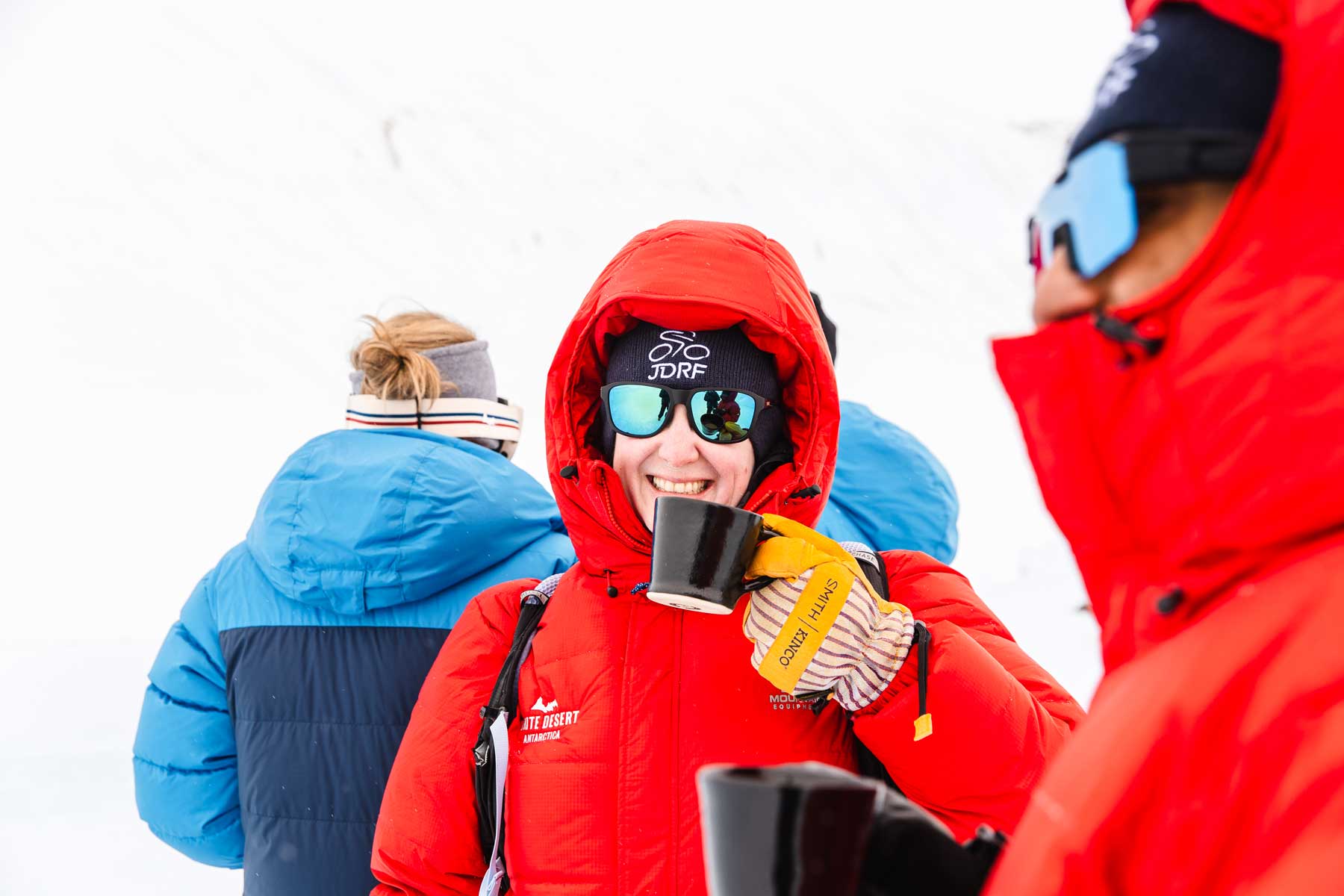
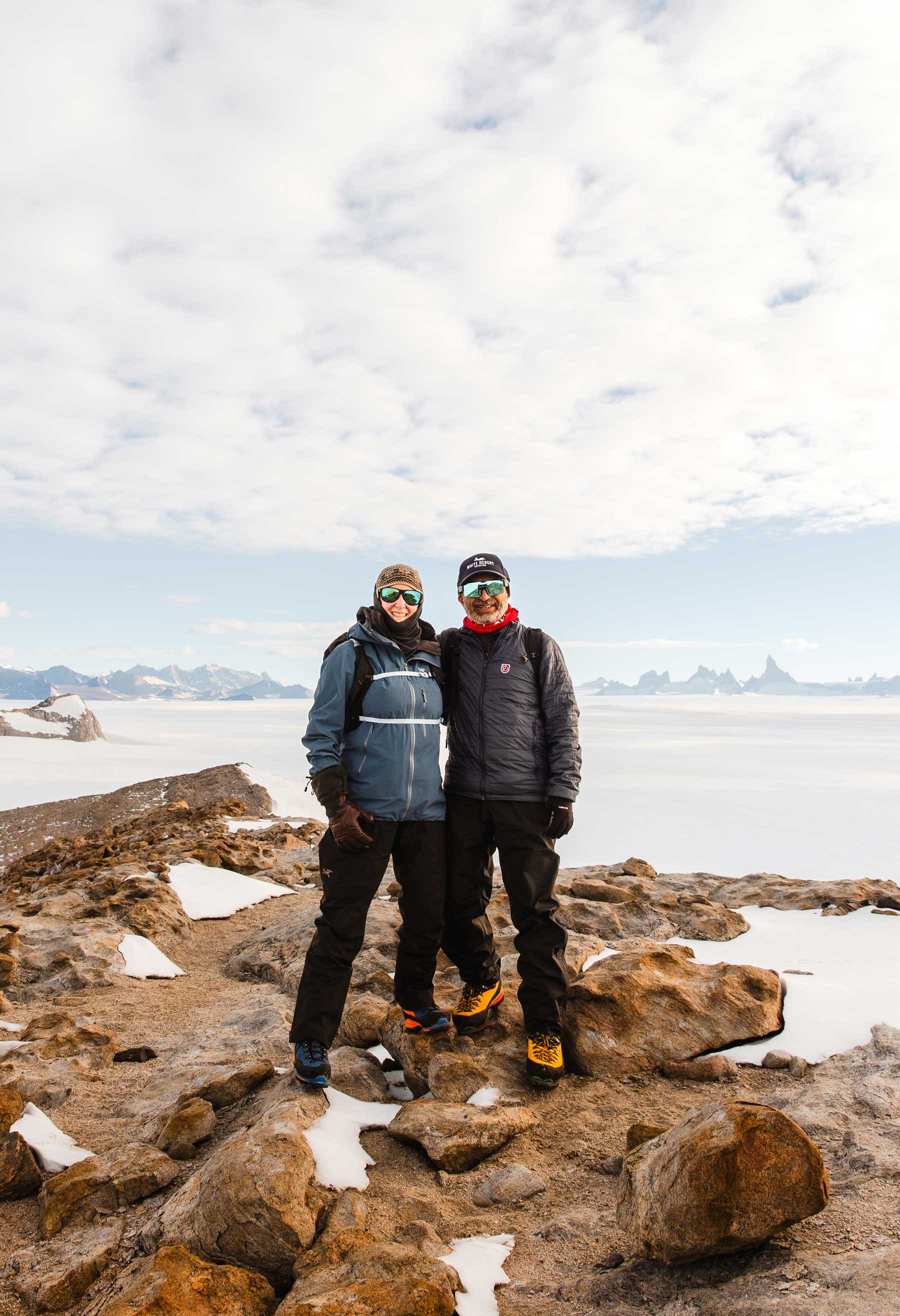
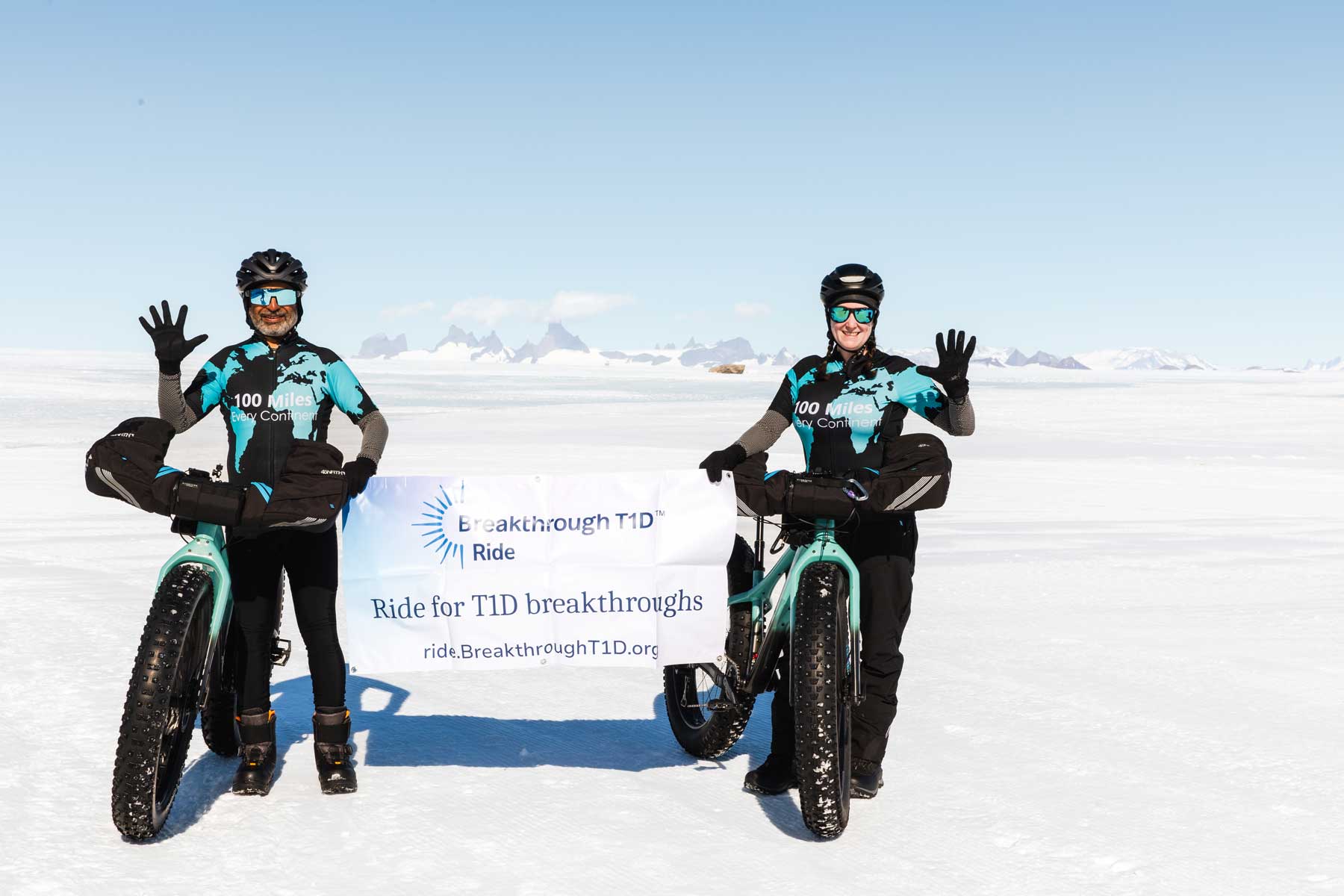
Pictured above: 1. Emily enjoying a warm drink. 2. Sunnie and Emily, taken on "T-Rex Mountain", a large rock outcropping (called nunataks in Antarctica). This nunatak was named T-rex mountain by the White Desert Crew because, from a distance, it resembles a T-Rex laying on its side. They hiked up to the top on Jan 22, the day before they began their ride as part of their acclimatization day. 3. Emily and Sunnie with their Breakthrough T1D banner. Picture credits to White Desert Antarctica (@white.desert.antarctica on IG)
Pictured above: 1. Emily enjoying a warm drink. 2. Sunnie and Emily, taken on "T-Rex Mountain", a large rock outcropping (called nunataks in Antarctica). This nunatak was named T-rex mountain by the White Desert Crew because, from a distance, it resembles a T-Rex laying on its side. They hiked up to the top on Jan 22, the day before they began their ride as part of their acclimatization day. 3. Emily and Sunnie with their Breakthrough T1D banner. Picture credits to White Desert Antarctica (@white.desert.antarctica on IG)
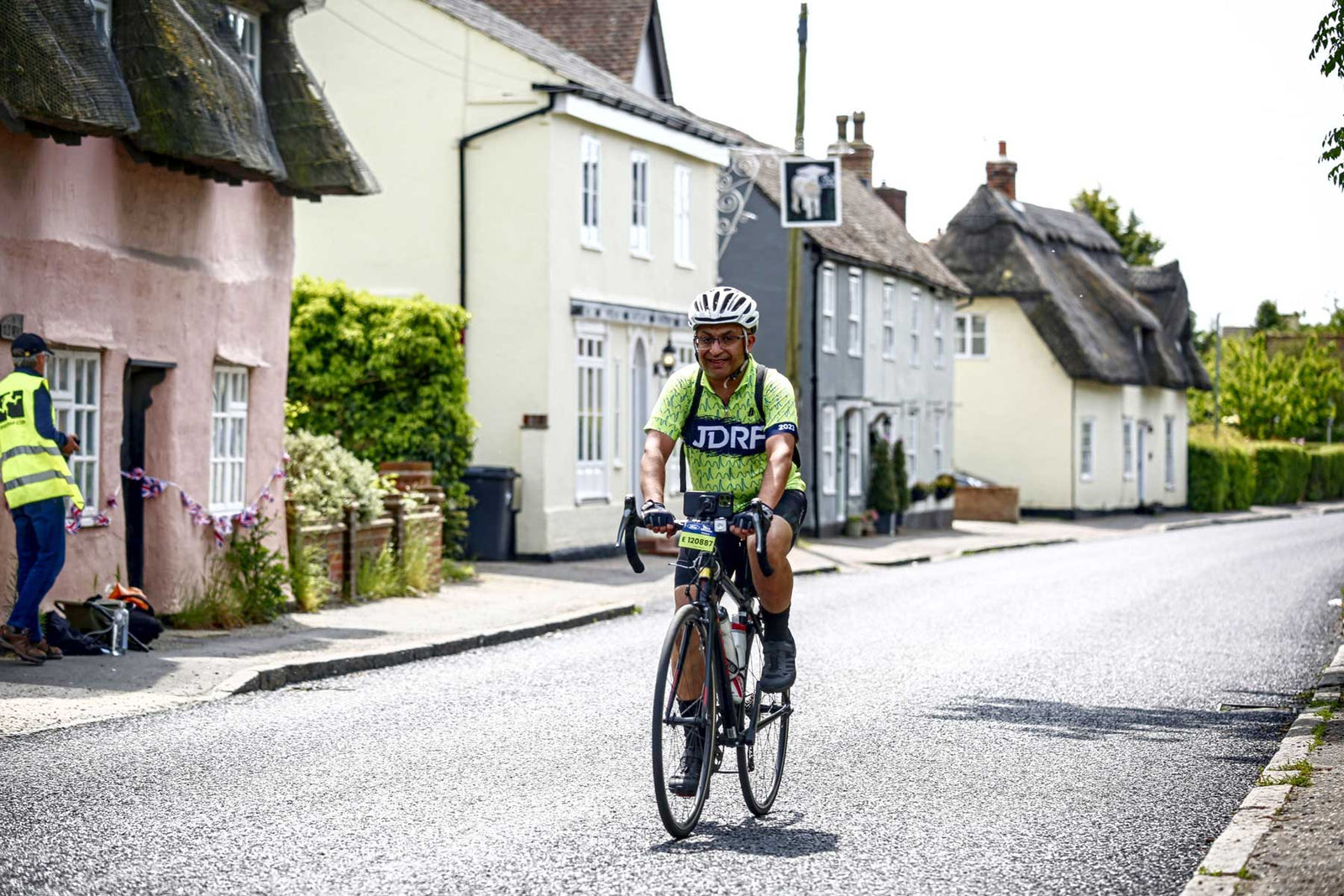

The first continent outside North America was Europe in 2023, where we participated in the Ford RideLondon-Essex 100, through Breakthrough T1D (then JDRF). With over 25,000 participants, it was one of the world’s largest bike rides; so large that sections of highways were shut down for the better part of the day to accommodate the riders! Starting from Buckingham palace and ending on the iconic Tower Bridge, the ride wove its way through the streets of London before heading into the verdant countryside to Essex, going past picture-perfect English towns and villages, complete with cricket on the village green, church ladies serving tea and sandwiches to riders, and farmers offering strawberries and cream.
The first continent outside North America was Europe in 2023, where we participated in the Ford RideLondon-Essex 100, through Breakthrough T1D (then JDRF). With over 25,000 participants, it was one of the world’s largest bike rides; so large that sections of highways were shut down for the better part of the day to accommodate the riders! Starting from Buckingham palace and ending on the iconic Tower Bridge, the ride wove its way through the streets of London before heading into the verdant countryside to Essex, going past picture-perfect English towns and villages, complete with cricket on the village green, church ladies serving tea and sandwiches to riders, and farmers offering strawberries and cream.
2024 saw us in Australia participating in JDRF Australia One Ride event. That the event was held in Barossa Valley, one of the world’s top wine-growing regions didn’t influence our decision to ride there, but boy was it fun! In January, Australia’s summer, the weather can be hot, and we got served an extra-large serving of heat; the course had to be closed early due to extreme heat warnings. But that didn’t take anything away from the beauty of the ride along shady eucalyptus lined roads, beautiful little towns, rolling hills with vineyards as far as the eye could see (we kept our hydrating to water and electrolytes during the ride), and an absolute killer hill right at the end before entering our host hotel.
2024 saw us in Australia participating in JDRF Australia One Ride event. That the event was held in Barossa Valley, one of the world’s top wine-growing regions didn’t influence our decision to ride there, but boy was it fun! In January, Australia’s summer, the weather can be hot, and we got served an extra-large serving of heat; the course had to be closed early due to extreme heat warnings. But that didn’t take anything away from the beauty of the ride along shady eucalyptus lined roads, beautiful little towns, rolling hills with vineyards as far as the eye could see (we kept our hydrating to water and electrolytes during the ride), and an absolute killer hill right at the end before entering our host hotel.
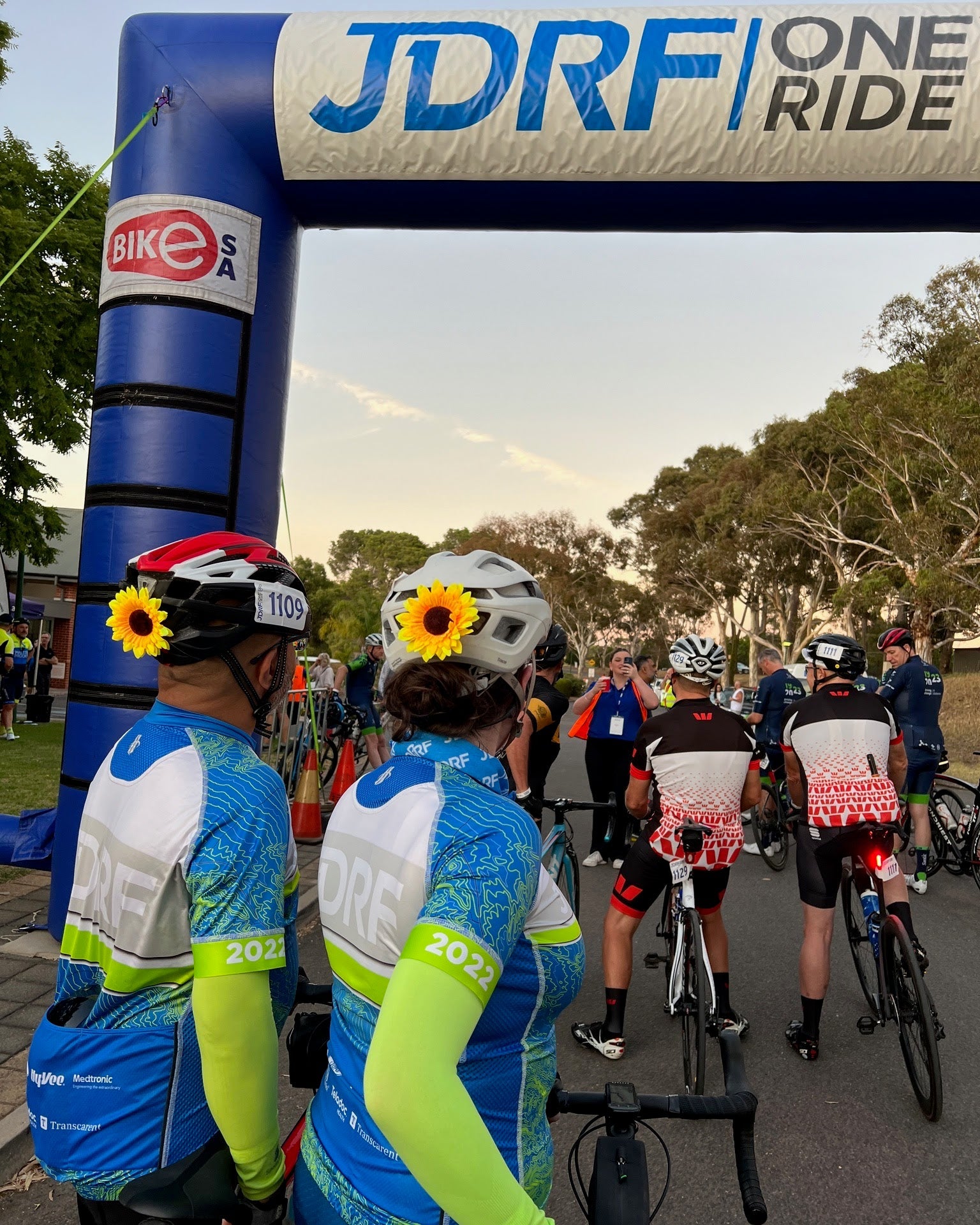

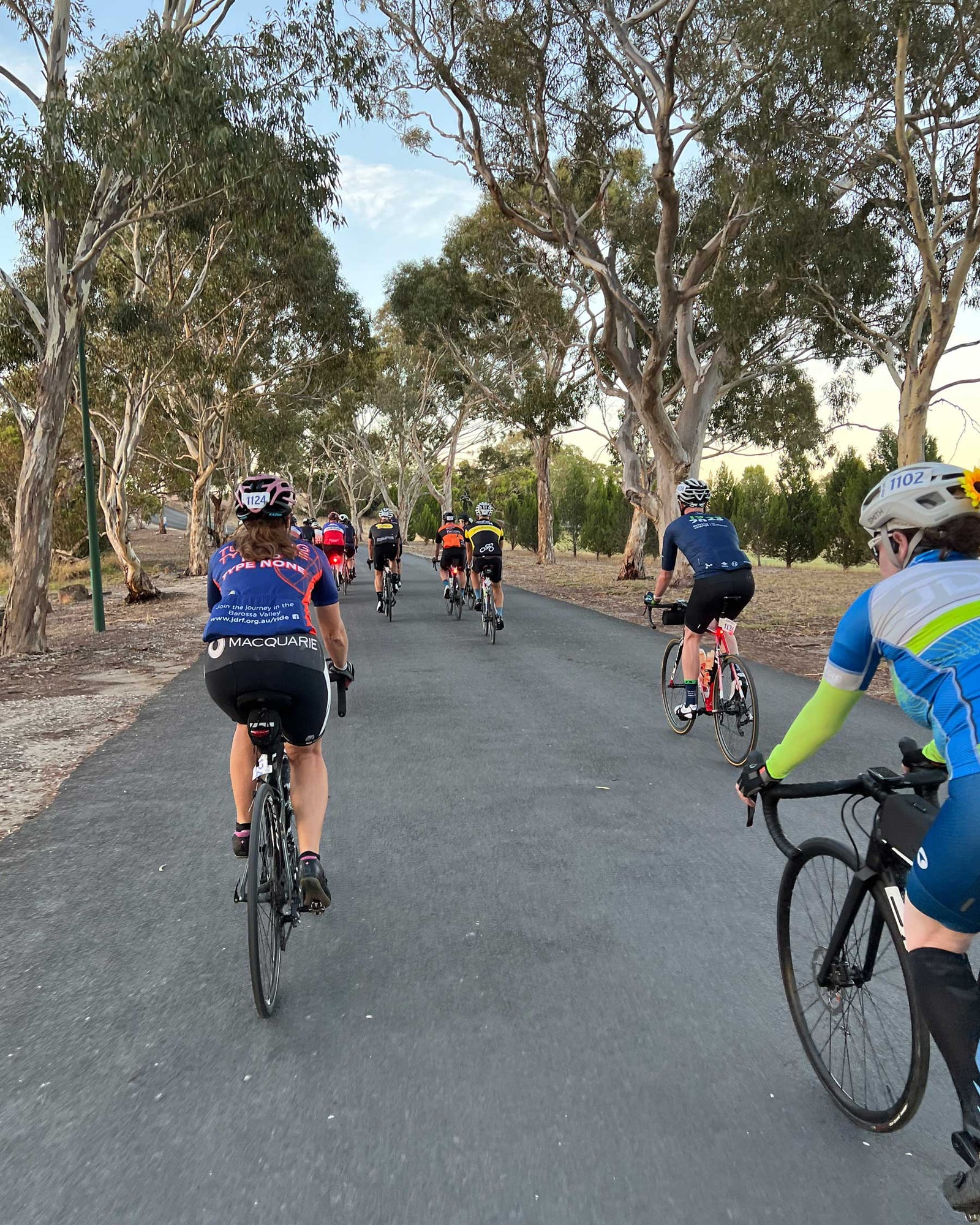

Pictured above: Sunnie and Emily's team in Georgia always wears a "helmet topper" to be noticed, and for some fun. Late in 2023, one of their team-mates was diagnosed with terminal brain cancer, and since she was such a happy, cheerful person, they - as a team - decided to honor her by wearing a sunflower on their helmets. She died soon after their Australia ride in 2024. The sunflower is still worn by the team during big rides to honor her, and also any other rider who may have passed.
Pictured above: Sunnie and Emily's team in Georgia always wears a "helmet topper" to be noticed, and for some fun. Late in 2023, one of their team-mates was diagnosed with terminal brain cancer, and since she was such a happy, cheerful person, they - as a team - decided to honor her by wearing a sunflower on their helmets. She died soon after their Australia ride in 2024. The sunflower is still worn by the team during big rides to honor her, and also any other rider who may have passed.
With the two organized rides under our belt, the “how” became a bit more challenging. When the opportunity came up for us to hike to Everest Base Camp in November 2025, we decided to head there a bit earlier and complete the Asian leg of our journey in Nepal before the hike, because “why not?” No, we didn’t ride to the base camp...we are not that crazy but instead chose to go to Nepal’s Terai region which is at a lower elevation. For this ride, we teamed up with Chitwan Trails, an eco-tourism company based in Bharatpur. We were guided by Pramit Magar and Krishna Ghimire, neither of whom had ever done a 100-mile bike ride but jumped at the opportunity to organize one for us. They charted out a spectacular route for us in the Chitwan district that took us, among other places, into the buffer zone of the Chitwan National Forest where we could potentially have encountered wild rhinos, tigers, leopards, or elephants; if we were in their vicinity, they stayed out of sight. Emily did, however, had the opportunity to cut between two tame elephants on the road! We got stuck behind some water-buffalo in morning “traffic”, wound our way through farming villages where life doesn’t seem to have changed in 100 years, had a fall caused by a village dog (the scars of which Emily still sports), and finally ended getting caught in the very real mayhem and chaos of evening traffic in Nepal as we ended our ride in Bharatpur. This was our first century on mountain bikes, and our posteriors reminded us for a few days that it was the longest single day ride (timewise) we had done.
With the two organized rides under our belt, the “how” became a bit more challenging. When the opportunity came up for us to hike to Everest Base Camp in November 2025, we decided to head there a bit earlier and complete the Asian leg of our journey in Nepal before the hike, because “why not?” No, we didn’t ride to the base camp...we are not that crazy but instead chose to go to Nepal’s Terai region which is at a lower elevation. For this ride, we teamed up with Chitwan Trails, an eco-tourism company based in Bharatpur. We were guided by Pramit Magar and Krishna Ghimire, neither of whom had ever done a 100-mile bike ride but jumped at the opportunity to organize one for us. They charted out a spectacular route for us in the Chitwan district that took us, among other places, into the buffer zone of the Chitwan National Forest where we could potentially have encountered wild rhinos, tigers, leopards, or elephants; if we were in their vicinity, they stayed out of sight. Emily did, however, had the opportunity to cut between two tame elephants on the road! We got stuck behind some water-buffalo in morning “traffic”, wound our way through farming villages where life doesn’t seem to have changed in 100 years, had a fall caused by a village dog (the scars of which Emily still sports), and finally ended getting caught in the very real mayhem and chaos of evening traffic in Nepal as we ended our ride in Bharatpur. This was our first century on mountain bikes, and our posteriors reminded us for a few days that it was the longest single day ride (timewise) we had done.
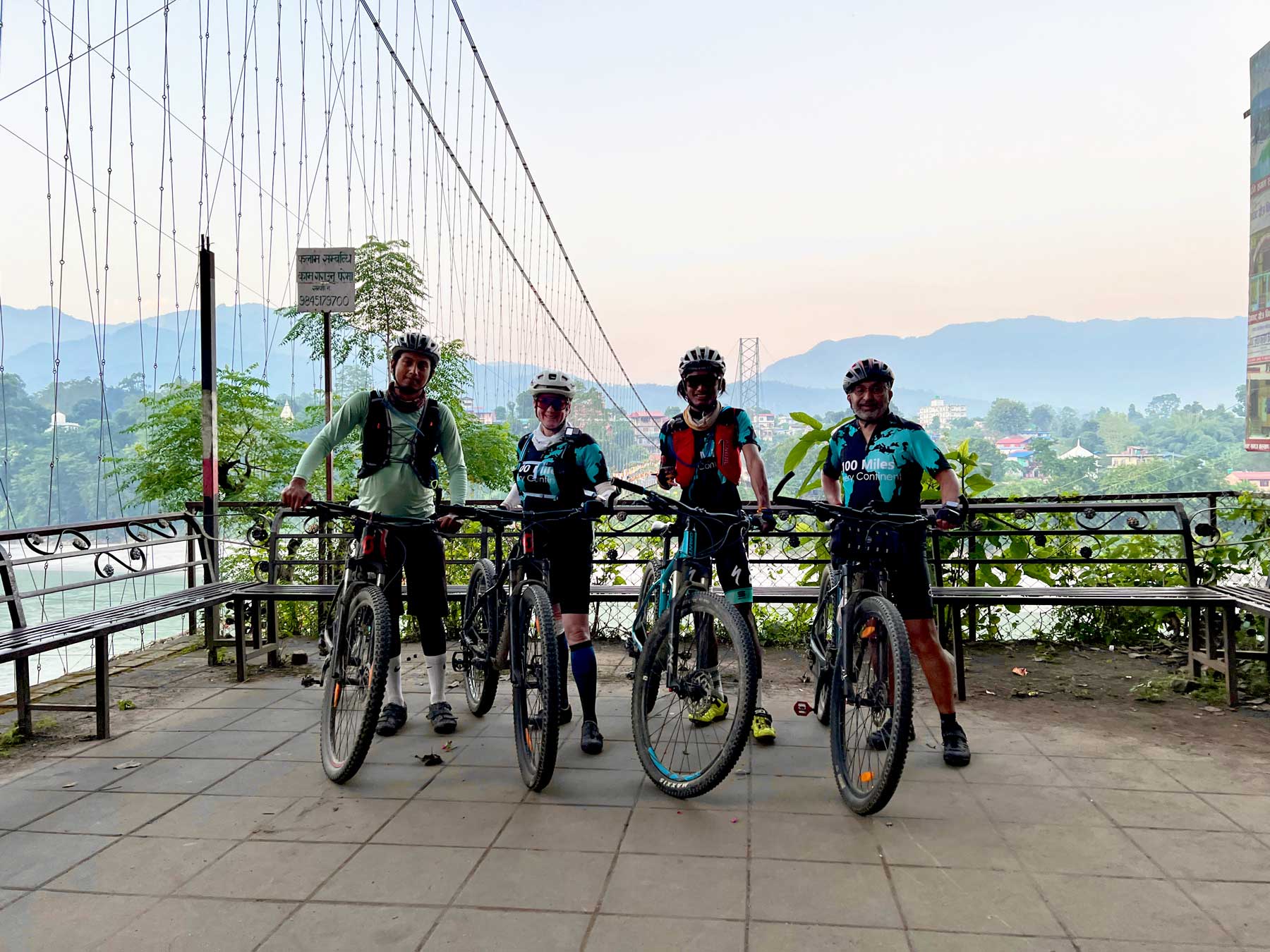
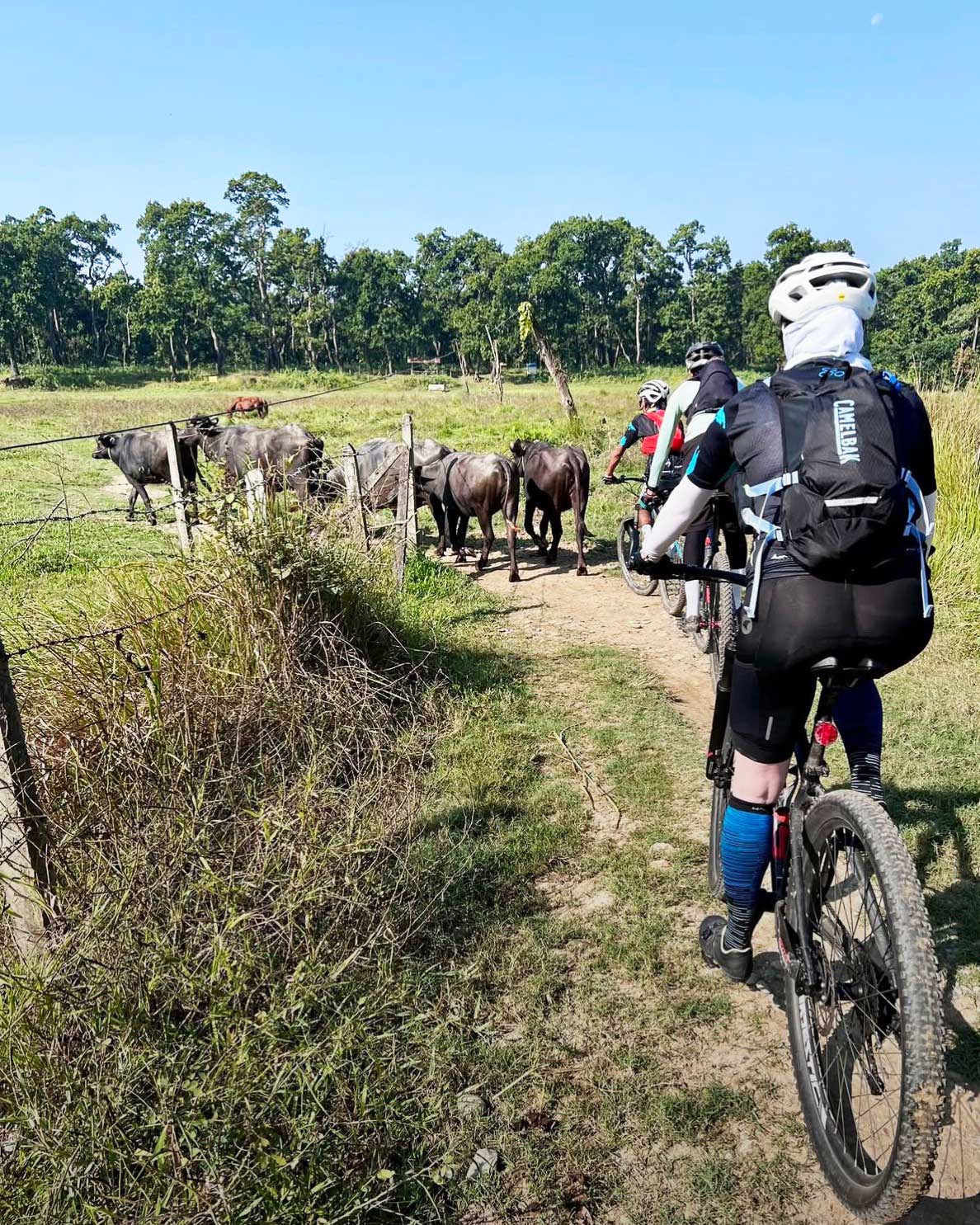
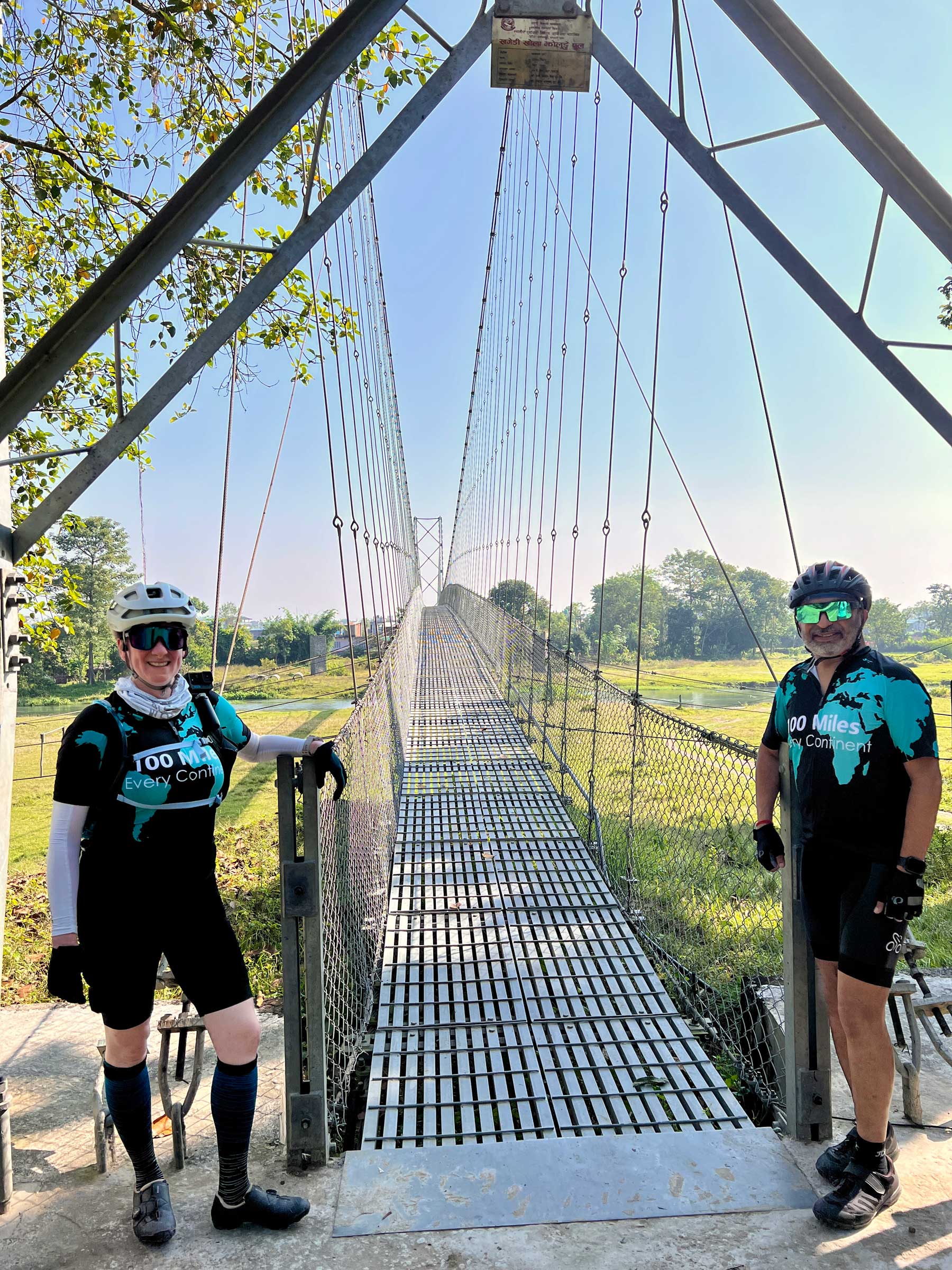
Pictured above: Sunnie and Emily on their Asian leg of their journey!
Pictured above: Sunnie and Emily on their Asian leg of their journey!
We still had three continents left and we were in no hurry to get them done. The question remained “How are we going to do Antarctica?” Things unexpectedly moved much quicker than we anticipated when we got an opportunity through White-Desert, a company that runs luxury trips to Antarctica to ride there in January, just 6 weeks after we returned from Nepal. We grabbed it with both hands, and – since we had to transit through Cape Town to fly into Antarctica – got the perfect opportunity to knock out Africa too. That meant three century rides on three continents in three months! As Atlantans, we barely had any experience riding on snow and ice, and had to scramble to put together our gear which included buying cold weather riding apparel and gear (some of which was generously donated by Pactimo, Bivo, and Almsthere), fat-tire bikes, and even bike bags that could accommodate the oversized fat tires, all of which Sunnie admits could not have been possible without Emily’s meticulous research. Antarctica isn’t a place you can “just wing it”.
We still had three continents left and we were in no hurry to get them done. The question remained “How are we going to do Antarctica?” Things unexpectedly moved much quicker than we anticipated when we got an opportunity through White-Desert, a company that runs luxury trips to Antarctica to ride there in January, just 6 weeks after we returned from Nepal. We grabbed it with both hands, and – since we had to transit through Cape Town to fly into Antarctica – got the perfect opportunity to knock out Africa too. That meant three century rides on three continents in three months! As Atlantans, we barely had any experience riding on snow and ice, and had to scramble to put together our gear which included buying cold weather riding apparel and gear (some of which was generously donated by Pactimo, Bivo, and Almsthere), fat-tire bikes, and even bike bags that could accommodate the oversized fat tires, all of which Sunnie admits could not have been possible without Emily’s meticulous research. Antarctica isn’t a place you can “just wing it”.
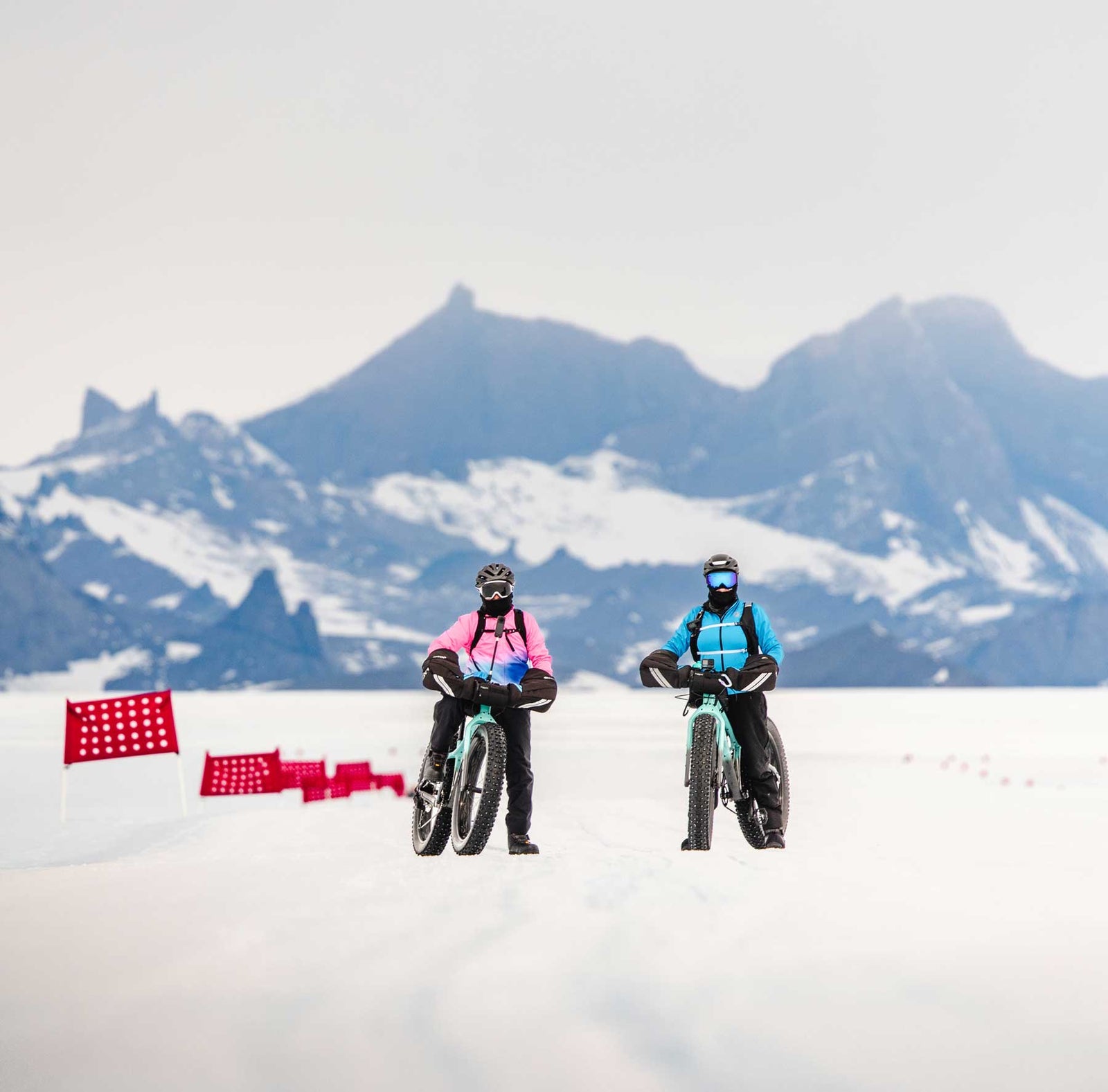

We landed in Antarctica on January 21, 2026, and began our ride on the 23rd, after using one day to acclimate, settle into Echo Camp - a set of temporary pods put together by White-Desert to house and feed the guests and staff - and get briefed on the available resources, conditions and dangers that lay outside the maintained paths - crevasses, ice that the wind had eroded into pointed ripples, slick snow formed by the Pistenbullys shaving the ice to form paths, fierce winds that could knock us over or worse, blow us off the path into the rippled ice where a fall could cause serious hurt. White-Desert had several guides on staff - experienced alpine athletes and guides - whose advice we relied on and took seriously.
We landed in Antarctica on January 21, 2026, and began our ride on the 23rd, after using one day to acclimate, settle into Echo Camp - a set of temporary pods put together by White-Desert to house and feed the guests and staff - and get briefed on the available resources, conditions and dangers that lay outside the maintained paths - crevasses, ice that the wind had eroded into pointed ripples, slick snow formed by the Pistenbullys shaving the ice to form paths, fierce winds that could knock us over or worse, blow us off the path into the rippled ice where a fall could cause serious hurt. White-Desert had several guides on staff - experienced alpine athletes and guides - whose advice we relied on and took seriously.
Picture credits to White Desert Antarctica (@white.desert.antarctica on IG).
Picture credits to White Desert Antarctica (@white.desert.antarctica on IG).
We had anticipated a slow ride with the combination of fat tires and snowy/icy paths and planned to split the 100 miles into two days instead of doing it in one as we usually did, but the winds had other plans. Every night we could hear the katabatic winds howl around our pods, and upon waking we could see the flags marking the path bending over in deference to it. They would let up enough for us to ride safely only after 9:00 AM (even with that rarely less than 15mph, and often with gusts well over 25mph) and pick up again later in the afternoon limiting the window of riding opportunity that we had. Additionally, the increased resistance of the terrain on our fat tires, constantly pushing against the wind (it was the only time in our riding lives that we had to work harder going downhill than coming back uphill), and the wind-chill to the already cold temps, meant that we needed to take more breaks to fuel and warm up. We spent about 7 hours every day on the ride, managing about 4.5 hours of ride time. With Sam Beaugey (adventurer and White Desert guide) for company, the 100 miles took 3.5 days and about 16 hours, and we had to push hard against fatigue, old injuries resurfacing, and muscle soreness, but it was very satisfying to complete it.
We had anticipated a slow ride with the combination of fat tires and snowy/icy paths and planned to split the 100 miles into two days instead of doing it in one as we usually did, but the winds had other plans. Every night we could hear the katabatic winds howl around our pods, and upon waking we could see the flags marking the path bending over in deference to it. They would let up enough for us to ride safely only after 9:00 AM (even with that rarely less than 15mph, and often with gusts well over 25mph) and pick up again later in the afternoon limiting the window of riding opportunity that we had. Additionally, the increased resistance of the terrain on our fat tires, constantly pushing against the wind (it was the only time in our riding lives that we had to work harder going downhill than coming back uphill), and the wind-chill to the already cold temps, meant that we needed to take more breaks to fuel and warm up. We spent about 7 hours every day on the ride, managing about 4.5 hours of ride time. With Sam Beaugey (adventurer and White Desert guide) for company, the 100 miles took 3.5 days and about 16 hours, and we had to push hard against fatigue, old injuries resurfacing, and muscle soreness, but it was very satisfying to complete it.
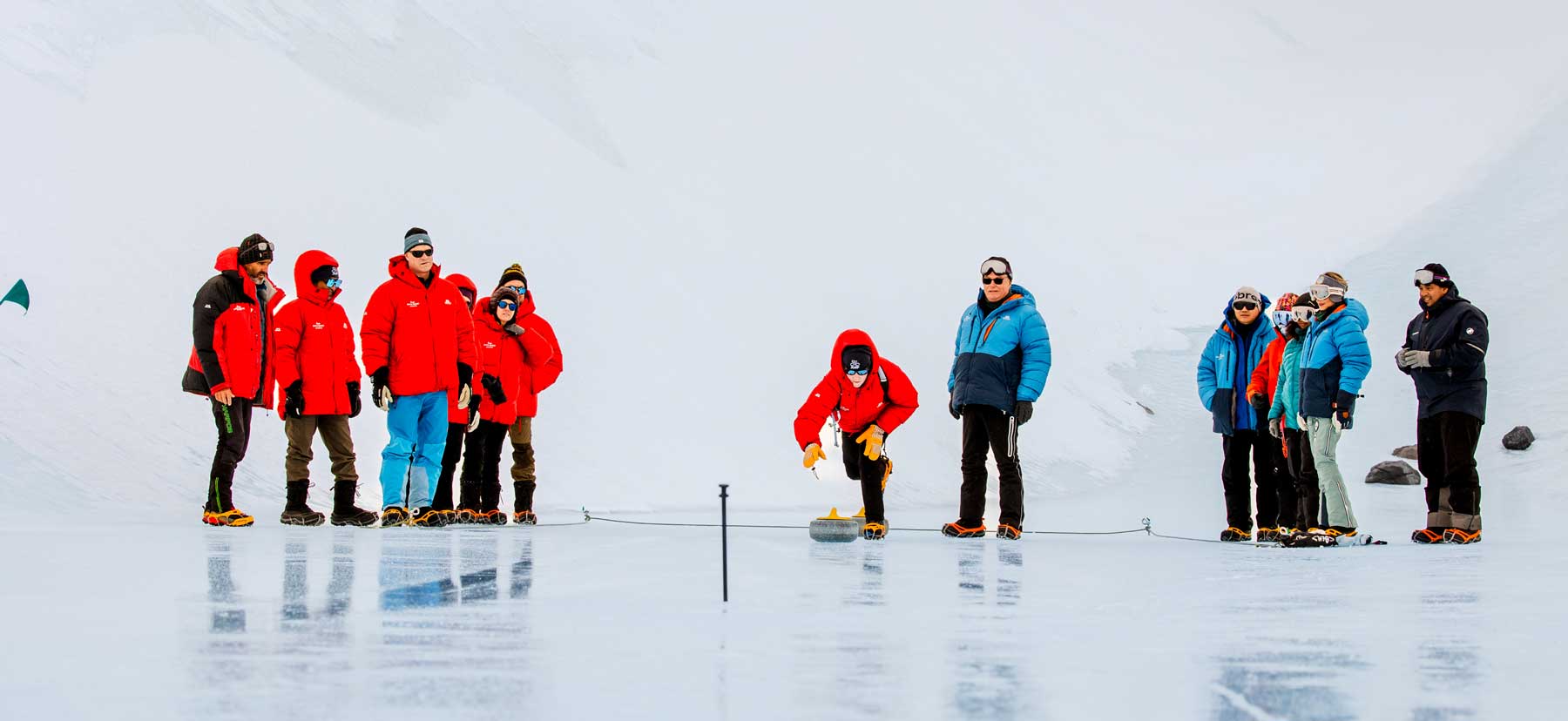
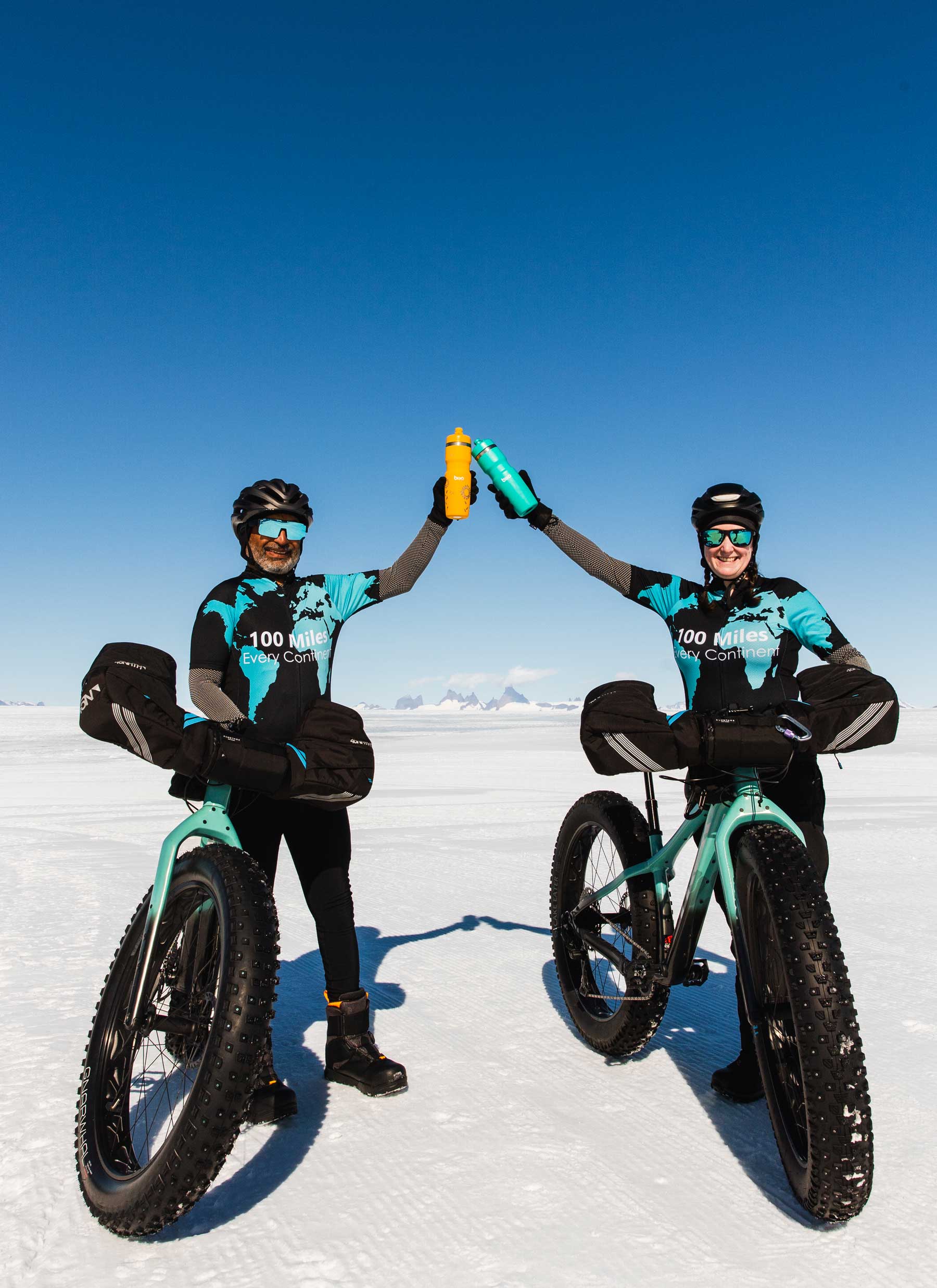
Pictured above: 1. Emily and Sunnie doing some cool-weather curling (organized by White Desert as an activity for their guests) after completing their ride! 2. A classic Bivo 'cheers' to riding 100 miles! Picture credits to White Desert Antarctica (@white.desert.antarctica on IG).
Pictured above: 1. Emily and Sunnie doing some cool-weather curling (organized by White Desert as an activity for their guests) after completing their ride! 2. A classic Bivo 'cheers' to riding 100 miles! Picture credits to White Desert Antarctica (@white.desert.antarctica on IG).
We returned to Cape Town 3 days later on a sleepless red-eye flight leaving us just enough time for a nap before getting ready for our Africa century the next day. Our bodies barely had enough time to recover from Antarctica’s bruising 4 days of riding and we implored William, our guide from Cycling Friends in Cape Town to map out an easy century for us. The first 65 miles, an out and back to Koeberg Nature Reserve from downtown Cape Town were reasonably flat, but had strong winds one way, which was to be expected given that we were riding on some very pretty roads along the coast. When we returned to downtown, we still had 35 miles to complete our century. William recommended Chapman’s Peak, which he stressed was scenic and a must do for all cyclists in Cape Town. The word “peak” should have been an obvious hint about how “flat” it was going to be, but we rolled with it. It was scenic all right as we rode along the coast on Victoria Road past Camps Bay and Sandy Cove with the Atlantic Ocean on one side and the majestic 12 Apostles mountain range on the other. But as we approached Hout’s Bay, the climb began and went on and on, and then some more, until we reached Chapman’s Peak. Sunnie, dogged by the inflammation of an old injury, was forced to resort to taking the help of an e-bike for the last section, but the ever-resilient Emily gritted it out for a truly epic climb. A quick photo at the top, and we returned downhill to complete our century near the Victoria and Albert Waterfront.
We returned to Cape Town 3 days later on a sleepless red-eye flight leaving us just enough time for a nap before getting ready for our Africa century the next day. Our bodies barely had enough time to recover from Antarctica’s bruising 4 days of riding and we implored William, our guide from Cycling Friends in Cape Town to map out an easy century for us. The first 65 miles, an out and back to Koeberg Nature Reserve from downtown Cape Town were reasonably flat, but had strong winds one way, which was to be expected given that we were riding on some very pretty roads along the coast. When we returned to downtown, we still had 35 miles to complete our century. William recommended Chapman’s Peak, which he stressed was scenic and a must do for all cyclists in Cape Town. The word “peak” should have been an obvious hint about how “flat” it was going to be, but we rolled with it. It was scenic all right as we rode along the coast on Victoria Road past Camps Bay and Sandy Cove with the Atlantic Ocean on one side and the majestic 12 Apostles mountain range on the other. But as we approached Hout’s Bay, the climb began and went on and on, and then some more, until we reached Chapman’s Peak. Sunnie, dogged by the inflammation of an old injury, was forced to resort to taking the help of an e-bike for the last section, but the ever-resilient Emily gritted it out for a truly epic climb. A quick photo at the top, and we returned downhill to complete our century near the Victoria and Albert Waterfront.
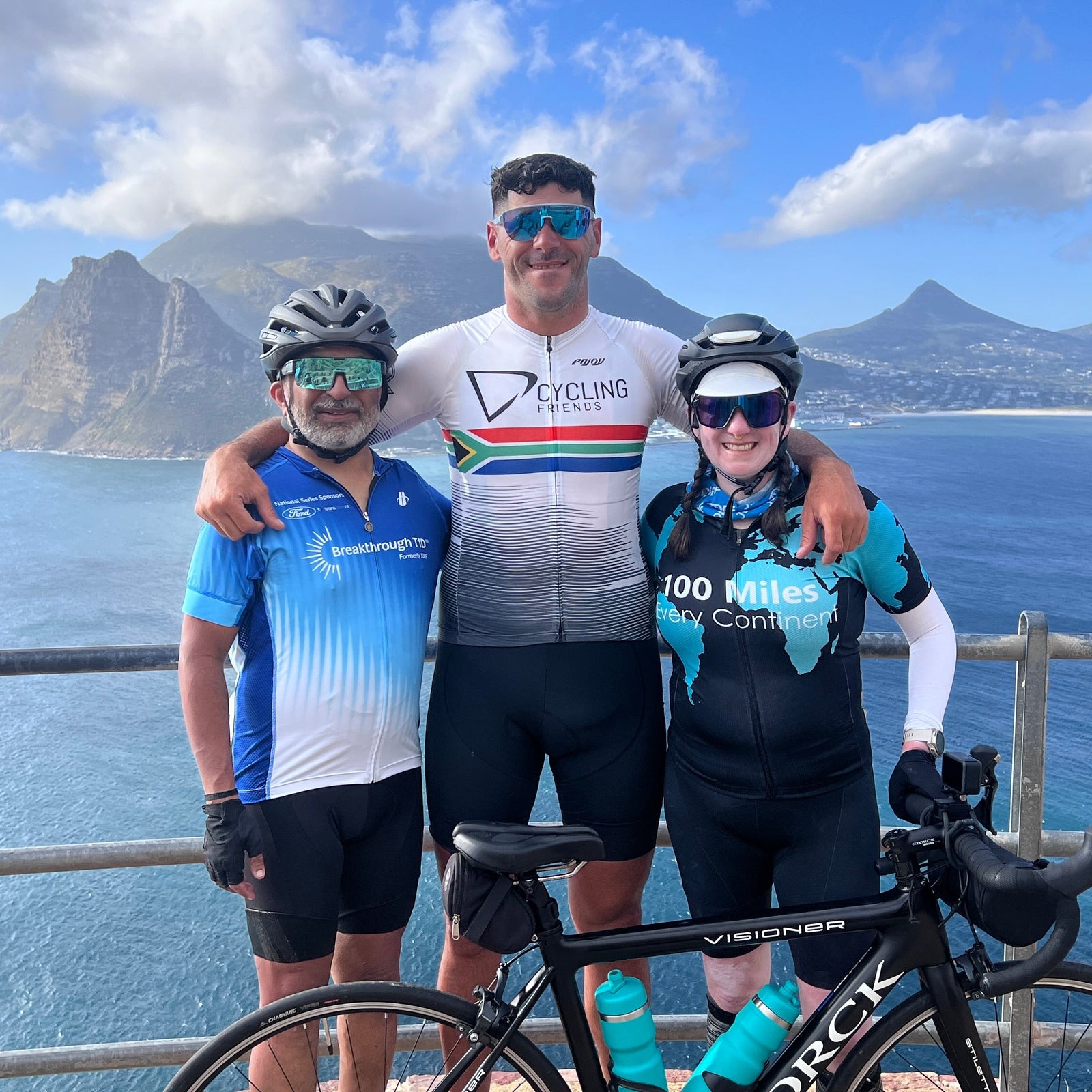

Pictured above: Sunnie and Emly with William on top of Chapman’s Peak in Cape Town looking over Hout Bay.
Pictured above: Sunnie and Emly with William on top of Chapman’s Peak in Cape Town looking over Hout Bay.
We have South America in our sights to wrap up our 7-continent adventure, where we fully expect to continue the learning and growth that came with our travels so far.
If you would like to donate to the causes dear to us, please visit:
Type 1 Diabetes: www.teamvarun.com
Ovarian Cancer: https://fundraise.givesmart.com/vf/OCIHostFun/EMILYBlum\
We have South America in our sights to wrap up our 7-continent adventure, where we fully expect to continue the learning and growth that came with our travels so far.
If you would like to donate to the causes dear to us, please visit:
Type 1 Diabetes: www.teamvarun.com
Ovarian Cancer: https://fundraise.givesmart.com/vf/OCIHostFun/EMILYBlum\






Leave a comment (all fields required)