





June 6th, 2026 | Written by Kyla Channell | Sports Nutritionist to Professional Athletes
Summer heat is here! It's getting hot at Bivo HQ, and we know it’s already been hot for so many of you in warmer climates. We wanted to do some research ourselves into one question: does drinking cold water actually help your performance? We consulted with a professional to learn more. We hope you a learn a thing or two to help your training this summer, I know I did!
Kyla Channell is a sports nutritionist to professional athletes with 15 years of experience working at the highest levels of sport. She holds a bachelor's degree in clinical dietetics from UC Davis, a master's degree in nutrition and human performance (graduated with honors), and a two-year sports nutrition diploma from the International Olympic Committee. Her roster has included professional athletes such as Dani Moreno, Sarah Sturm, Laura King, Brennan Wertz, and John John Florence, and her clients have competed on the Olympic stage. She joins us to talk about one of the most misunderstood variables in endurance performance: what heat actually does to your hydration needs.
Summer heat is here! It's getting hot at Bivo HQ, and we know it’s already been hot for so many of you in warmer climates. We wanted to do some research ourselves into one question: does drinking cold water actually help your performance? We consulted with a professional to learn more. We hope you a learn a thing or two to help your training this summer, I know I did!
Kyla Channell is a sports nutritionist to professional athletes with 15 years of experience working at the highest levels of sport. She holds a bachelor's degree in clinical dietetics from UC Davis, a master's degree in nutrition and human performance (graduated with honors), and a two-year sports nutrition diploma from the International Olympic Committee. Her roster has included professional athletes such as Dani Moreno, Sarah Sturm, Laura King, Brennan Wertz, and John John Florence, and her clients have competed on the Olympic stage. She joins us to talk about one of the most misunderstood variables in endurance performance: what heat actually does to your hydration needs.
I have a client, an ultra runner, incredibly disciplined, someone who takes his training seriously, who learned one of the most humbling lessons in endurance sport on back-to-back days on the same trail.
Day one: 65 degrees, a long run he knew well, a sweat rate of about 40 ounces per hour. Hard, but manageable.
Day two: same trail, same pace, same runner. The temperature averaged 75 degrees. His sweat rate doubled to 80 ounces per hour.
He didn't run harder. His pace was the same but man did it feel harder.
That single 10-degree shift was the difference between a good training day and one where his body was quietly falling behind from the first mile. He had the same plan, the same bottles, the same snacks. But the environment had changed the rules, and nobody told him.
If you train and race in warm conditions, and let's be honest, summer isn't going anywhere, understanding what heat does to your body, and how to stay ahead of it, is one of the highest-return investments you can make in your performance.
I have a client, an ultra runner, incredibly disciplined, someone who takes his training seriously, who learned one of the most humbling lessons in endurance sport on back-to-back days on the same trail.
Day one: 65 degrees, a long run he knew well, a sweat rate of about 40 ounces per hour. Hard, but manageable.
Day two: same trail, same pace, same runner. The temperature averaged 75 degrees. His sweat rate doubled to 80 ounces per hour.
He didn't run harder. His pace was the same but man did it feel harder.
That single 10-degree shift was the difference between a good training day and one where his body was quietly falling behind from the first mile. He had the same plan, the same bottles, the same snacks. But the environment had changed the rules, and nobody told him.
If you train and race in warm conditions, and let's be honest, summer isn't going anywhere, understanding what heat does to your body, and how to stay ahead of it, is one of the highest-return investments you can make in your performance.
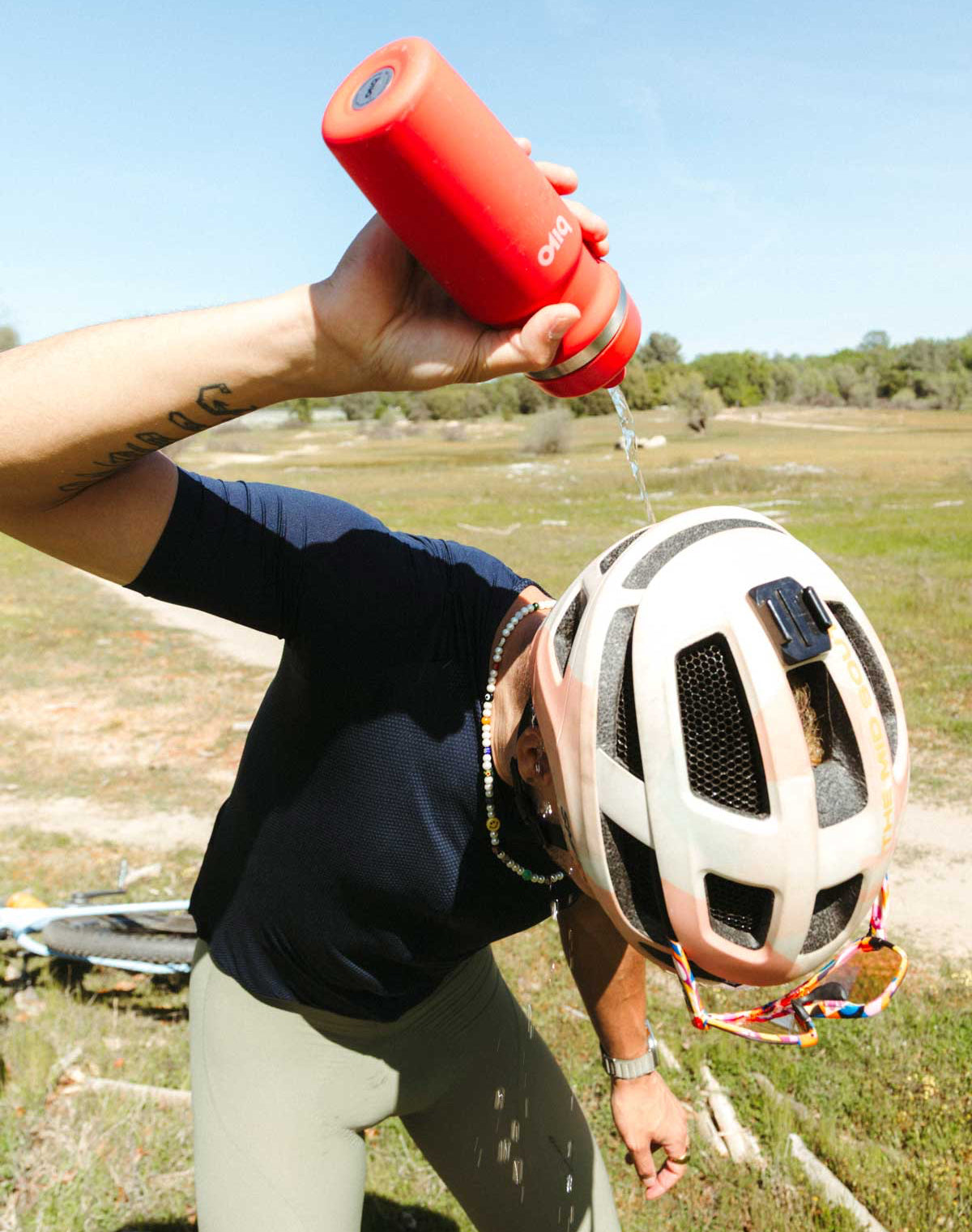

When you exercise in the heat, your cardiovascular system is pulled in two directions simultaneously. It needs to deliver oxygen to your working muscles, and it needs to route blood to your skin so you can sweat and release heat. Those two demands compete with each other.
Sweat is your body's primary cooling mechanism. As it evaporates off your skin, it carries heat with it. But sweating costs you fluid, and as your fluid levels drop, your blood thickens slightly, your heart has to work harder, and your ability to sustain effort gets quietly more expensive with every passing mile.
The problem is that this process is incremental. You don't feel the tipping point coming. You just notice 90 min in that your legs feel heavier than they should, your perceived effort is disproportionately high, and your motivation has taken a strange dip. That's not a mental weakness. That's physiology catching up with an under-fueled cooling system.
When you exercise in the heat, your cardiovascular system is pulled in two directions simultaneously. It needs to deliver oxygen to your working muscles, and it needs to route blood to your skin so you can sweat and release heat. Those two demands compete with each other.
Sweat is your body's primary cooling mechanism. As it evaporates off your skin, it carries heat with it. But sweating costs you fluid, and as your fluid levels drop, your blood thickens slightly, your heart has to work harder, and your ability to sustain effort gets quietly more expensive with every passing mile.
The problem is that this process is incremental. You don't feel the tipping point coming. You just notice 90 min in that your legs feel heavier than they should, your perceived effort is disproportionately high, and your motivation has taken a strange dip. That's not a mental weakness. That's physiology catching up with an under-fueled cooling system.
Thank you @Joshuastrong for the above picture!
Thank you @Joshuastrong for the above picture!
Sweat rates vary enormously between athletes. Based on the research and what I see in practice, fluid losses during exercise can range anywhere from roughly 16 to 64 ounces per hour under moderate conditions, and significantly more in the heat, especially for high-sweat athletes. One literature review showed up to 4 liters of sweat per hour or 128 oz/hr in some high sweat loss individuals (Kenefick RW, 2016).
My ultra runner client was already on the higher end compared to many of my other athletes. But when temperatures climbed by just 10 degrees, he hit 80 ounces per hour. That's 2.5 liters in a single hour. Unless you're running an aid-station-heavy event and drinking aggressively, most athletes are not replacing anywhere near that in the field.
The important takeaway is that your sweat rate isn't fixed. It's dynamic. It responds to temperature, humidity, exercise intensity, your acclimatization status, and even your individual physiology. What worked for your last race in mild conditions is almost certainly not sufficient for a race day that's 10 degrees warmer.
A simple way to get a rough sense of your own sweat rate: weigh yourself before and after a one-hour training session without drinking. Every pound of weight lost represents approximately 16 ounces of fluid. It's not perfect, but it's informative — and for most athletes, the number is higher than they expect.
Sweat rates vary enormously between athletes. Based on the research and what I see in practice, fluid losses during exercise can range anywhere from roughly 16 to 64 ounces per hour under moderate conditions, and significantly more in the heat, especially for high-sweat athletes. One literature review showed up to 4 liters of sweat per hour or 128 oz/hr in some high sweat loss individuals (Kenefick RW, 2016).
My ultra runner client was already on the higher end compared to many of my other athletes. But when temperatures climbed by just 10 degrees, he hit 80 ounces per hour. That's 2.5 liters in a single hour. Unless you're running an aid-station-heavy event and drinking aggressively, most athletes are not replacing anywhere near that in the field.
The important takeaway is that your sweat rate isn't fixed. It's dynamic. It responds to temperature, humidity, exercise intensity, your acclimatization status, and even your individual physiology. What worked for your last race in mild conditions is almost certainly not sufficient for a race day that's 10 degrees warmer.
A simple way to get a rough sense of your own sweat rate: weigh yourself before and after a one-hour training session without drinking. Every pound of weight lost represents approximately 16 ounces of fluid. It's not perfect, but it's informative — and for most athletes, the number is higher than they expect.
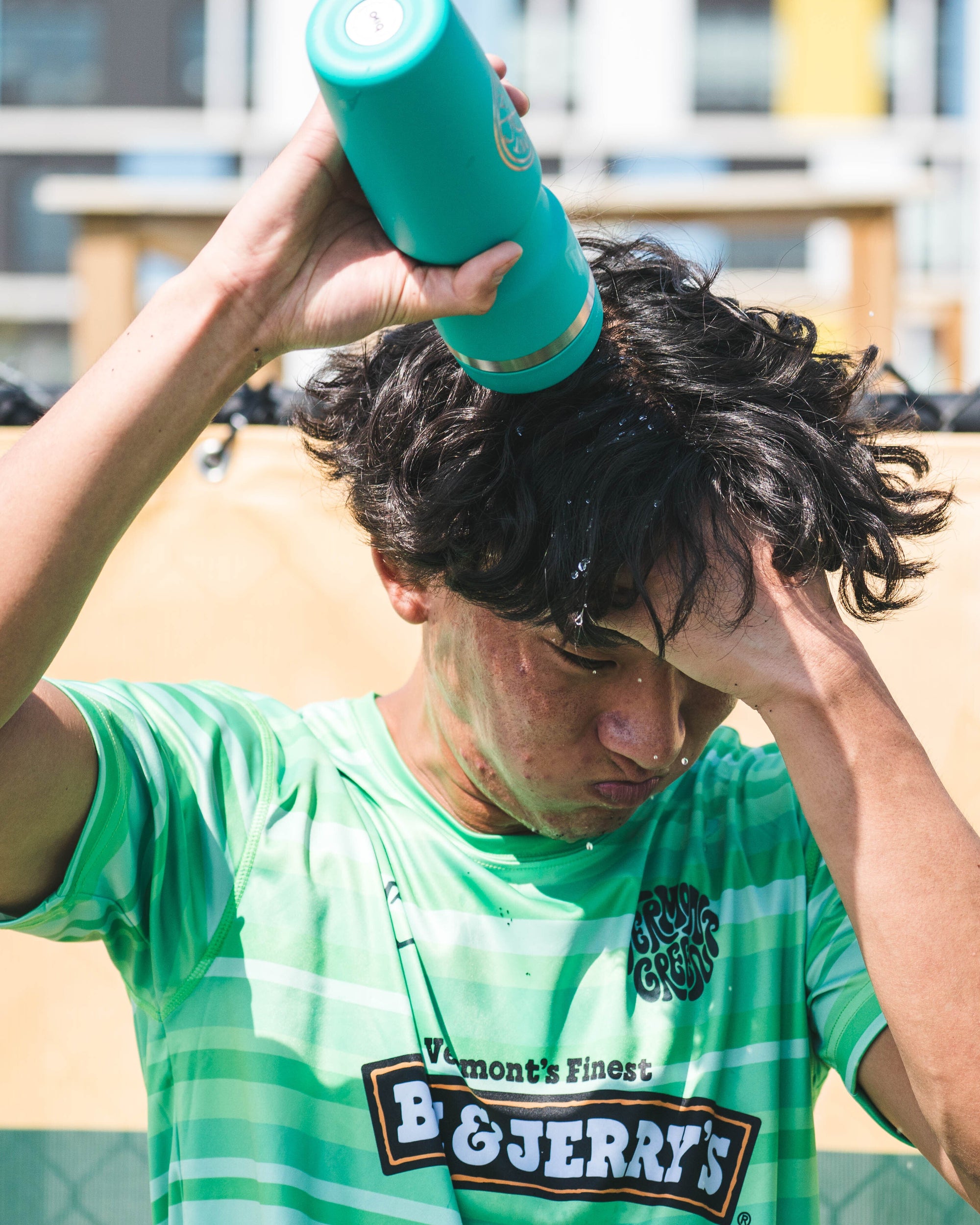
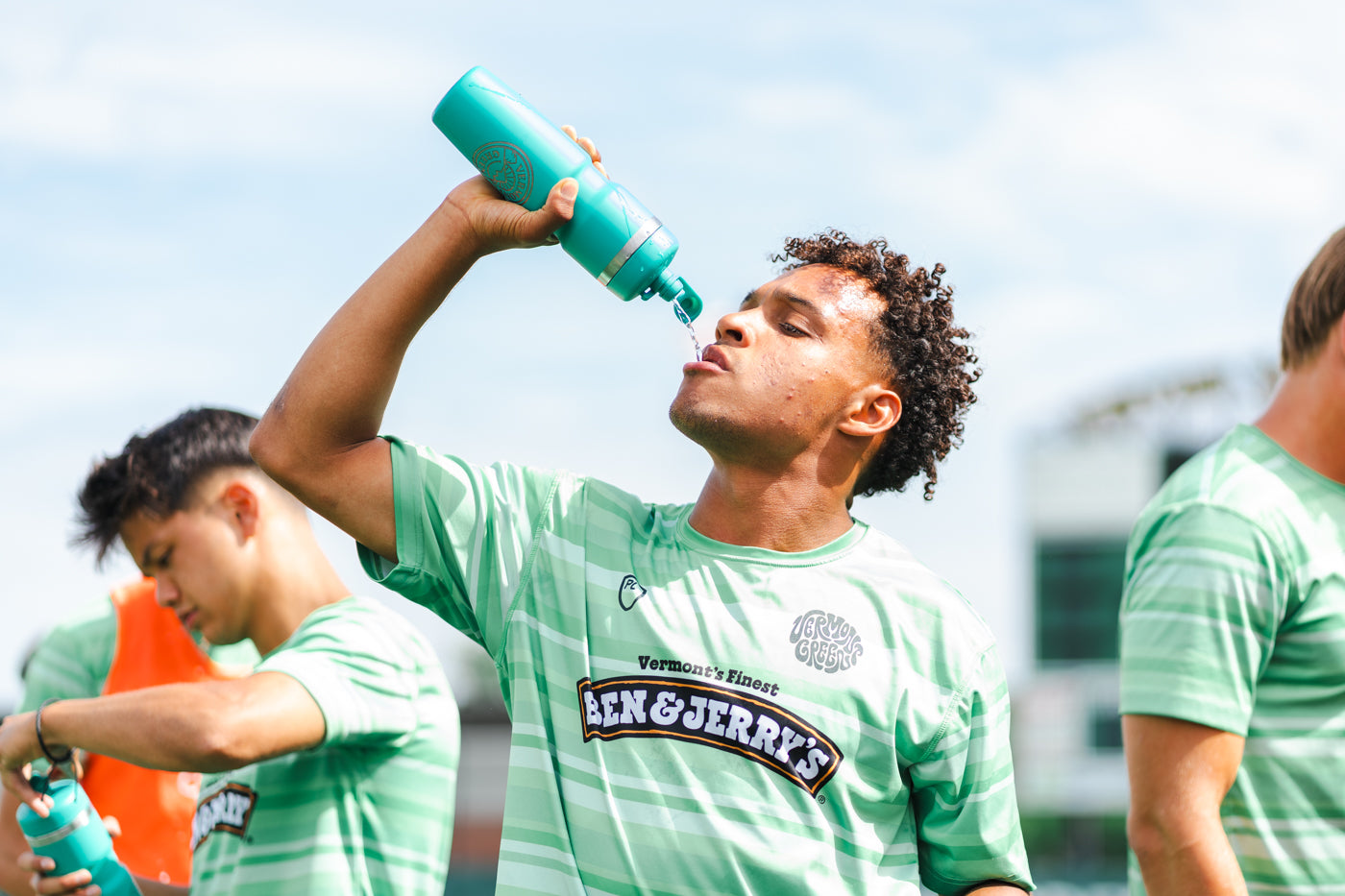
Dehydration in the heat rarely announces itself loudly. It creeps. Here's what I typically hear from athletes who didn't stay on top of it:
Power or pace drops faster than expected, and they can't explain it. Heart rate increases. Perceived effort climbs disproportionately to the effort being put in. Early cramping shows up, often in the legs or core, where electrolyte losses compound fluid deficits. GI distress becomes more likely as blood is directed away from the gut. And then there's the subtle cognitive fog: decisions feel slower, motivation feels thin, small problems feel bigger than they are.
Research consistently shows that fluid losses representing even a small percentage of body weight can meaningfully impair aerobic performance, and in the heat, those losses accumulate faster than most athletes realize. The goal isn't to eliminate sweat; it's to stay close enough to hydrated that your body can keep sweating and doing its job of cooling you.
For my ultra runner, the GI issues and cramping piece were the first signals. Midway through that 75-degree run, he said he felt stomach and muscle cramps coming on even though he was using the same fueling and hydration combos as the day prior. That's not poor fueling. That's a thermoregulatory system under strain.
Dehydration in the heat rarely announces itself loudly. It creeps. Here's what I typically hear from athletes who didn't stay on top of it:
Power or pace drops faster than expected, and they can't explain it. Heart rate increases. Perceived effort climbs disproportionately to the effort being put in. Early cramping shows up, often in the legs or core, where electrolyte losses compound fluid deficits. GI distress becomes more likely as blood is directed away from the gut. And then there's the subtle cognitive fog: decisions feel slower, motivation feels thin, small problems feel bigger than they are.
Research consistently shows that fluid losses representing even a small percentage of body weight can meaningfully impair aerobic performance, and in the heat, those losses accumulate faster than most athletes realize. The goal isn't to eliminate sweat; it's to stay close enough to hydrated that your body can keep sweating and doing its job of cooling you.
For my ultra runner, the GI issues and cramping piece were the first signals. Midway through that 75-degree run, he said he felt stomach and muscle cramps coming on even though he was using the same fueling and hydration combos as the day prior. That's not poor fueling. That's a thermoregulatory system under strain.
Here's what I actually work on with my athletes when summer arrives and the stakes go up:
The hour before a hot training session or race matters. I encourage athletes to take in extra fluid and sodium in the 60–90 minutes prior to starting, not gulping water right before, but a steady, intentional pre-load. Starting even slightly behind is a disadvantage that compounds quickly in the heat. A new hyperhydration protocol was released suggesting in the 2-3 hours pre race consume 20-25 mL/kg fluids with 3-5 grams sodium chloride. For a 150 lb athlete this equates to 46 to 57 oz with 3000 - 5000 mg sodium mixed in.
Sweat isn't just water, it carries sodium, chloride, potassium, and magnesium with it. Replacing fluid without replacing electrolytes can actually dilute your blood sodium levels, which creates its own set of problems. In hot conditions, I'm almost always recommending sodium-containing fluids or supplements alongside plain water, not instead of it.
This is the piece most athletes miss. They have a hydration plan — maybe one bottle per hour — and they stick to it regardless of what the thermometer says. That plan was built for average conditions. On a hot day, it needs to scale. If your sweat rate can double with a 10-degree temperature increase, your intake strategy needs to account for that.
Drinking to thirst is a solid guideline under normal conditions, but in the heat, your thirst mechanism can lag behind your actual fluid needs, especially during hard efforts. I tell athletes to use thirst as a baseline signal, but to drink slightly ahead of it when temperatures are high. Don't ignore thirst, and don't wait for it to become urgent.
Here's what I actually work on with my athletes when summer arrives and the stakes go up:
The hour before a hot training session or race matters. I encourage athletes to take in extra fluid and sodium in the 60–90 minutes prior to starting, not gulping water right before, but a steady, intentional pre-load. Starting even slightly behind is a disadvantage that compounds quickly in the heat. A new hyperhydration protocol was released suggesting in the 2-3 hours pre race consume 20-25 mL/kg fluids with 3-5 grams sodium chloride. For a 150 lb athlete this equates to 46 to 57 oz with 3000 - 5000 mg sodium mixed in.
Sweat isn't just water, it carries sodium, chloride, potassium, and magnesium with it. Replacing fluid without replacing electrolytes can actually dilute your blood sodium levels, which creates its own set of problems. In hot conditions, I'm almost always recommending sodium-containing fluids or supplements alongside plain water, not instead of it.
This is the piece most athletes miss. They have a hydration plan — maybe one bottle per hour — and they stick to it regardless of what the thermometer says. That plan was built for average conditions. On a hot day, it needs to scale. If your sweat rate can double with a 10-degree temperature increase, your intake strategy needs to account for that.
Drinking to thirst is a solid guideline under normal conditions, but in the heat, your thirst mechanism can lag behind your actual fluid needs, especially during hard efforts. I tell athletes to use thirst as a baseline signal, but to drink slightly ahead of it when temperatures are high. Don't ignore thirst, and don't wait for it to become urgent.


Here's something that doesn't get discussed enough in hydration conversations: the temperature of what you're drinking matters.
Research on internal cooling, drinking cold or ice-cold beverages during exercise in the heat, shows it can help reduce thermal strain and support performance. Cold fluid passing through your core helps manage that internal temperature load, even modestly. For long efforts on hot days, that modest help can add up.
And then there's external cooling — one of the most underused tools in an athlete's kit. Pouring cold water on your neck, wrists, or over your head is a legitimate thermoregulatory strategy. It's not just refreshing. It actively helps bring surface temperature down, which takes some of the cooling burden off your cardiovascular system.
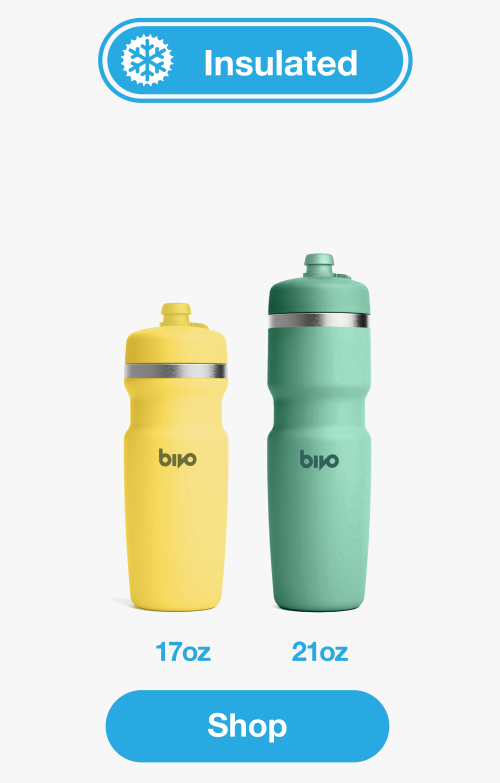
Both of these strategies only work if your water is actually cold when you need it. That's where gear starts to matter. An insulated bottle that keeps your water cold through a three-hour training ride or a half marathon isn't a luxury, it's a functional tool for heat management. Reaching for your bottle at mile 10 and finding that your water is sun-warm isn't just disappointing. It means you've lost one of your best options for managing core temperature in the field.
Here's something that doesn't get discussed enough in hydration conversations: the temperature of what you're drinking matters.
Research on internal cooling, drinking cold or ice-cold beverages during exercise in the heat, shows it can help reduce thermal strain and support performance. Cold fluid passing through your core helps manage that internal temperature load, even modestly. For long efforts on hot days, that modest help can add up.
And then there's external cooling — one of the most underused tools in an athlete's kit. Pouring cold water on your neck, wrists, or over your head is a legitimate thermoregulatory strategy. It's not just refreshing. It actively helps bring surface temperature down, which takes some of the cooling burden off your cardiovascular system.
Both of these strategies only work if your water is actually cold when you need it. That's where gear starts to matter. An insulated bottle that keeps your water cold through a three-hour training ride or a half marathon isn't a luxury, it's a functional tool for heat management. Reaching for your bottle at mile 10 and finding that your water is sun-warm isn't just disappointing. It means you've lost one of your best options for managing core temperature in the field.
After that 75-degree run and better understanding my clients sweat losses, we sat down and rebuilt his approach to hot-weather training. We looked at his sweat rate data, adjusted his pre-hydration protocol, dialed in his electrolyte strategy, and made sure his setup, including his bottles, could actually keep cold fluid cold for the duration of his long sessions.
The next time he ran in the heat, he came back and said it felt like a different sport. Not because the conditions were easier. They weren't. But because he understood what his body was up against, and he gave it what it needed to respond.
The heat is going to do what it does. Temperatures rise. Sweat rates double. Your cooling system works overtime. The question is whether your hydration plan rises with the temperature, or whether it stays fixed to a cooler day that no longer exists.
Plan for the day you're actually running. Not the one you trained for last month.
After that 75-degree run and better understanding my clients sweat losses, we sat down and rebuilt his approach to hot-weather training. We looked at his sweat rate data, adjusted his pre-hydration protocol, dialed in his electrolyte strategy, and made sure his setup, including his bottles, could actually keep cold fluid cold for the duration of his long sessions.
The next time he ran in the heat, he came back and said it felt like a different sport. Not because the conditions were easier. They weren't. But because he understood what his body was up against, and he gave it what it needed to respond.
The heat is going to do what it does. Temperatures rise. Sweat rates double. Your cooling system works overtime. The question is whether your hydration plan rises with the temperature, or whether it stays fixed to a cooler day that no longer exists.
Plan for the day you're actually running. Not the one you trained for last month.
References
1.Cheuvront SN, Kenefick RW. Mechanisms of aerobic performance impairment with heat stress and dehydration. J Appl Physiol. 2010;109(6):1989–1995. doi:10.1152/japplphysiol.00367.2010
2.Baker LB. Sweating rate and sweat sodium concentration in athletes: A review of methodology and intra/interindividual variability. Sports Med. 2017;47(Suppl 1):111–128. doi:10.1007/s40279-017-0691-5
3.Goulet ED, et al. A case-series observation of sweat rate variability in endurance-trained athletes. Int J Environ Res Public Health. 2021;18(11):5839. doi:10.3390/ijerph18115839
4.Kenefick RW, Cheuvront SN. Hypohydration and human performance: Impact of environment and physiological mechanisms. Sports Med. 2012;42(Suppl 1):S21–S27. doi:10.2165/11633910
5.Cheuvront SN, et al. Hydration and aerobic performance: Impact of environment. Gatorade Sports Science Exchange. 2014;27(128):1–6.
6.Jay O, Morris NR. Does cold water or ice slurry ingestion during exercise elicit a net body cooling effect in the heat? Sports Med. 2018;48(Suppl 1):S17–S29. doi:10.1007/s40279-017-0842-8
7.Tröster A, et al. Effects of internal cooling on physical performance, physiological and perceptional parameters when exercising in the heat: A systematic review with meta-analyses. Front Physiol. 2023;14:1125969. doi:10.3389/fphys.2023.1125969
8.Douzi W, et al. Cooling during exercise enhances performances, but the cooled body areas matter: A systematic review with meta-analyses. PLoS One. 2019;14(8):e0220500. doi:10.1371/journal.pone.0220500
References
1.Cheuvront SN, Kenefick RW. Mechanisms of aerobic performance impairment with heat stress and dehydration. J Appl Physiol. 2010;109(6):1989–1995. doi:10.1152/japplphysiol.00367.2010
2.Baker LB. Sweating rate and sweat sodium concentration in athletes: A review of methodology and intra/interindividual variability. Sports Med. 2017;47(Suppl 1):111–128. doi:10.1007/s40279-017-0691-5
3.Goulet ED, et al. A case-series observation of sweat rate variability in endurance-trained athletes. Int J Environ Res Public Health. 2021;18(11):5839. doi:10.3390/ijerph18115839
4.Kenefick RW, Cheuvront SN. Hypohydration and human performance: Impact of environment and physiological mechanisms. Sports Med. 2012;42(Suppl 1):S21–S27. doi:10.2165/11633910
5.Cheuvront SN, et al. Hydration and aerobic performance: Impact of environment. Gatorade Sports Science Exchange. 2014;27(128):1–6.
6.Jay O, Morris NR. Does cold water or ice slurry ingestion during exercise elicit a net body cooling effect in the heat? Sports Med. 2018;48(Suppl 1):S17–S29. doi:10.1007/s40279-017-0842-8
7.Tröster A, et al. Effects of internal cooling on physical performance, physiological and perceptional parameters when exercising in the heat: A systematic review with meta-analyses. Front Physiol. 2023;14:1125969. doi:10.3389/fphys.2023.1125969
8.Douzi W, et al. Cooling during exercise enhances performances, but the cooled body areas matter: A systematic review with meta-analyses. PLoS One. 2019;14(8):e0220500. doi:10.1371/journal.pone.0220500







Leave a comment (all fields required)