








June 20th, 2026 | by A.M. Van Doren
A.M. Van Doren is a lifelong cyclist, bikefitter and owner of Revolutions Per Bikefit Studio in Brooklyn, NY. We met A.M. at a Women in the Bike Industry event and instantly loved hearing everything they had to say about their experience bike fitting. We're sharing A.M's best tips with you today!
A.M. Van Doren is a lifelong cyclist, bikefitter and owner of Revolutions Per Bikefit Studio in Brooklyn, NY. We met A.M. at a Women in the Bike Industry event and instantly loved hearing everything they had to say about their experience bike fitting. We're sharing A.M's best tips with you today!
Unlike most modern technical and gear-dependent spots (think skiing, surfing, golf) where we see a development of structured group and private instruction to support athlete and recreational development, cycling is still largely colloquial in instruction. As a bikefitter and lifelong cyclist, most clients I see describe a familiar story: their parent, friend or partner introduced them to cycling.
Unlike most modern technical and gear-dependent spots (think skiing, surfing, golf) where we see a development of structured group and private instruction to support athlete and recreational development, cycling is still largely colloquial in instruction. As a bikefitter and lifelong cyclist, most clients I see describe a familiar story: their parent, friend or partner introduced them to cycling.
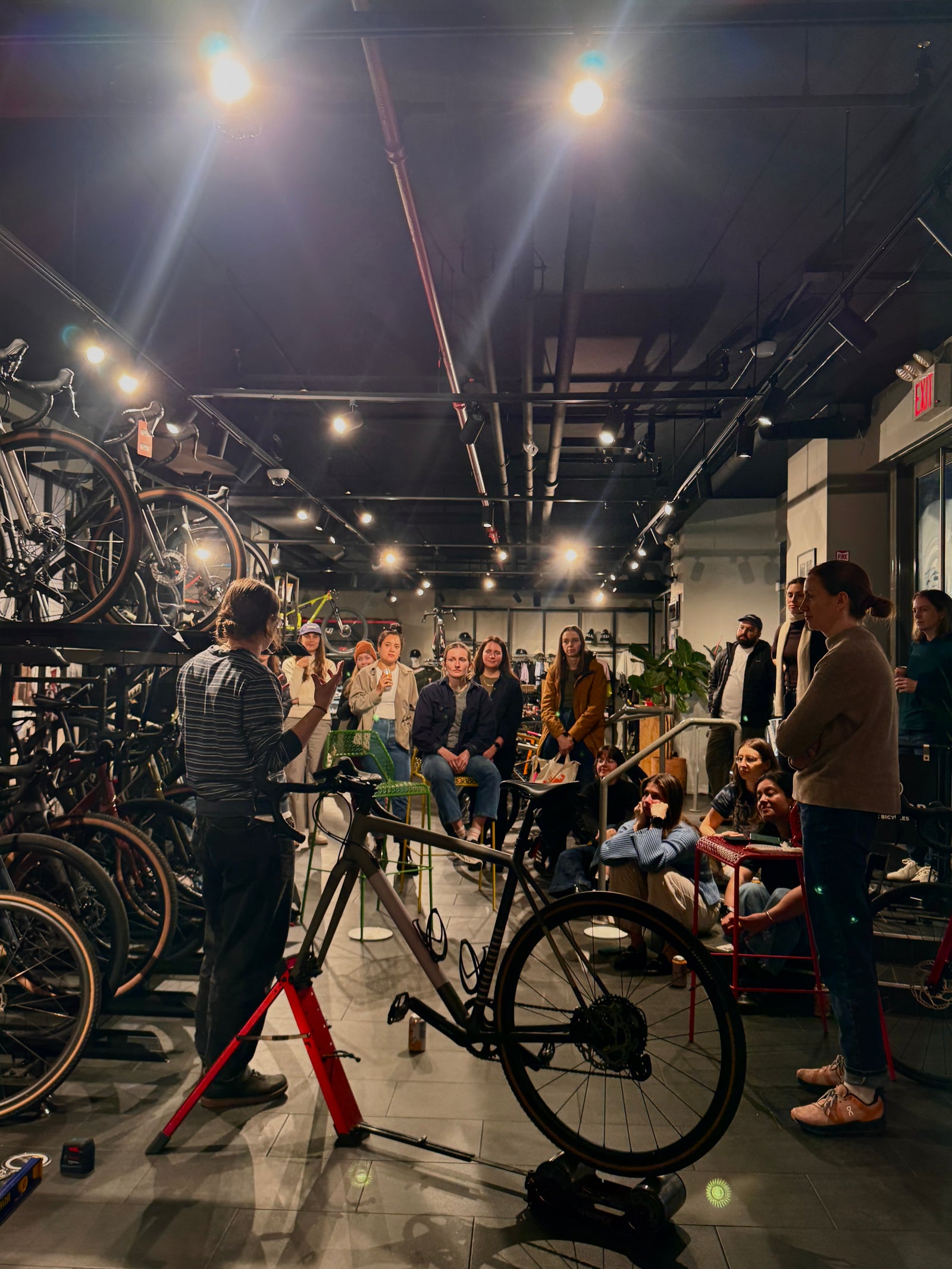

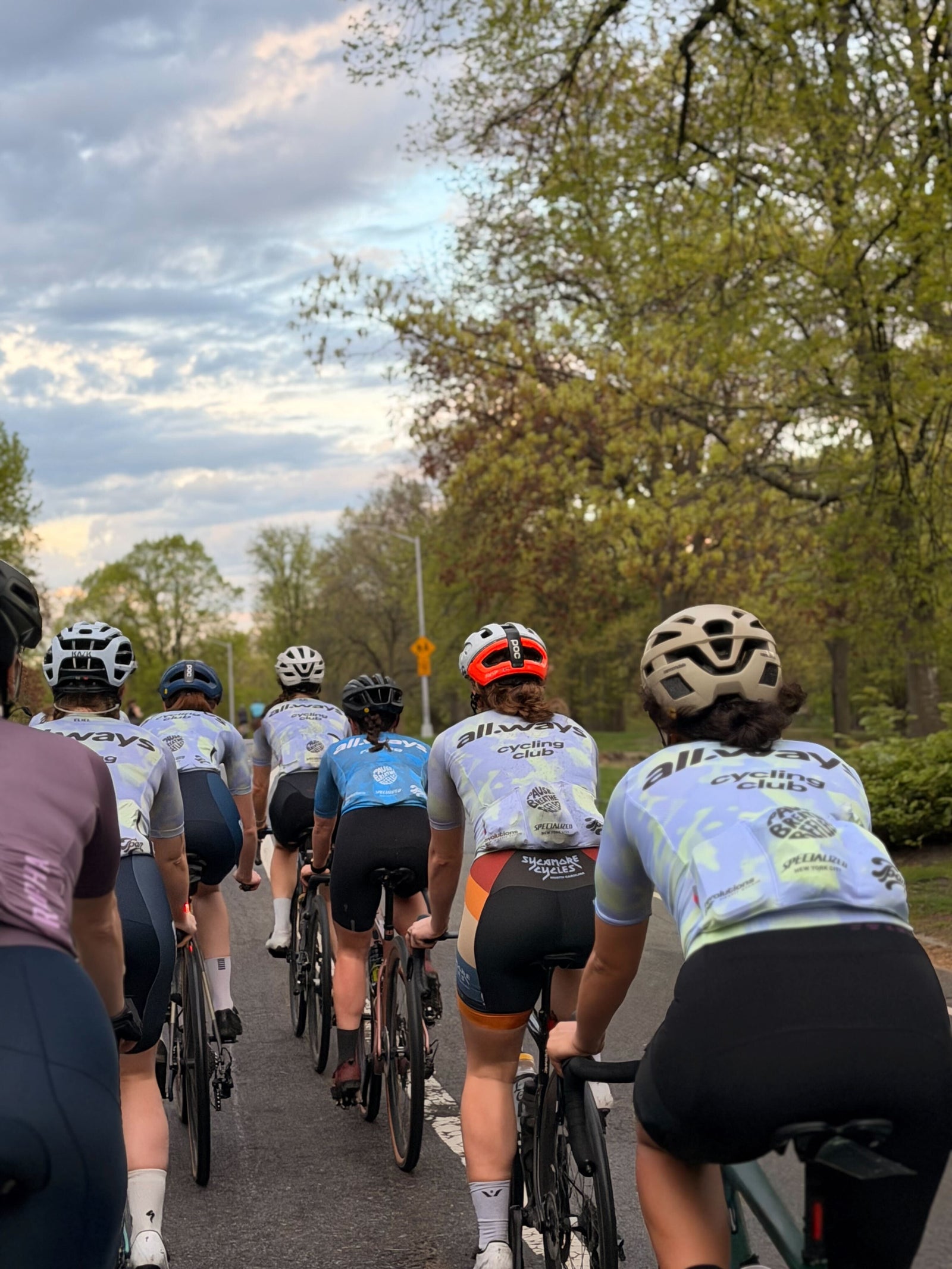

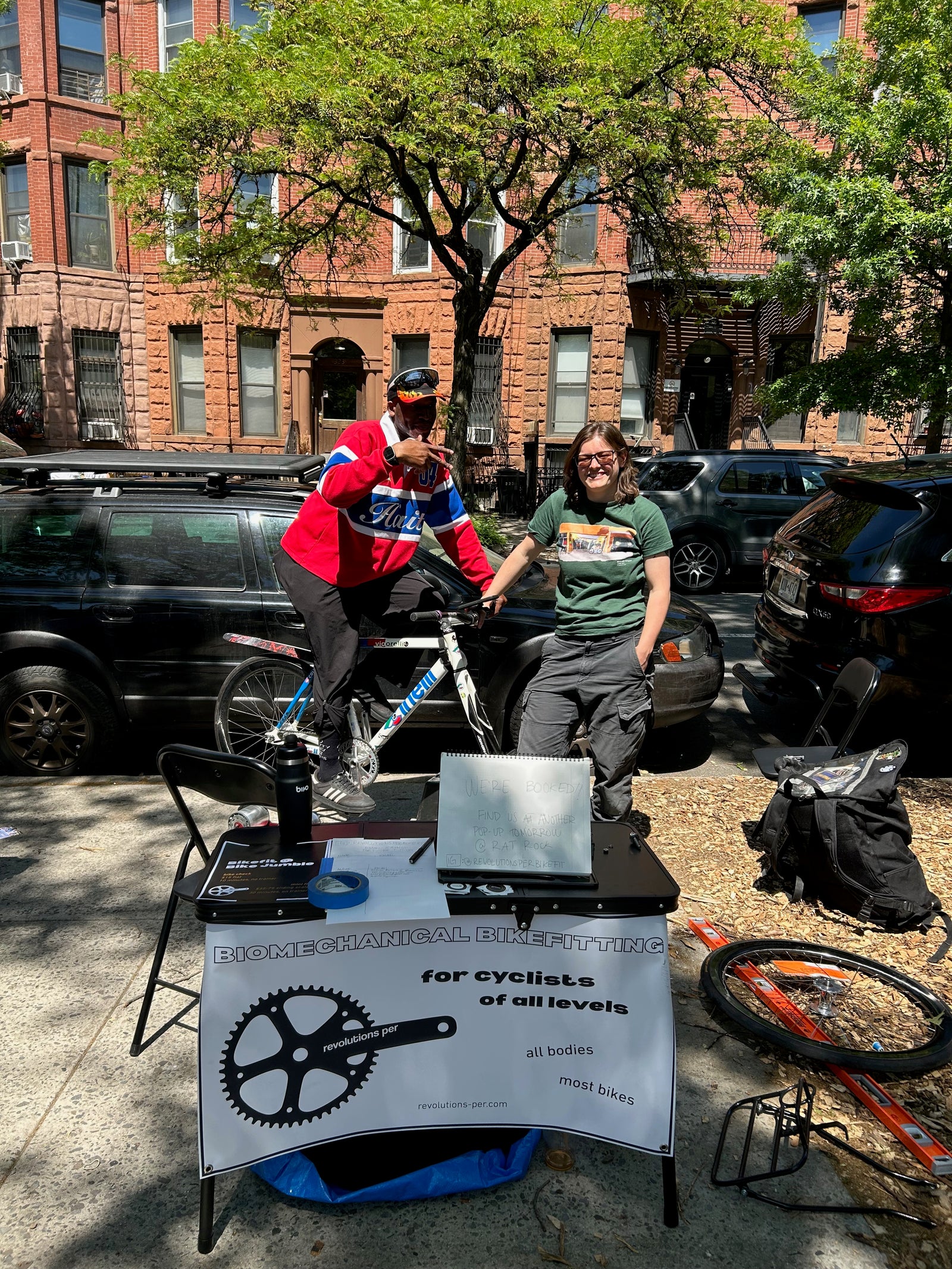

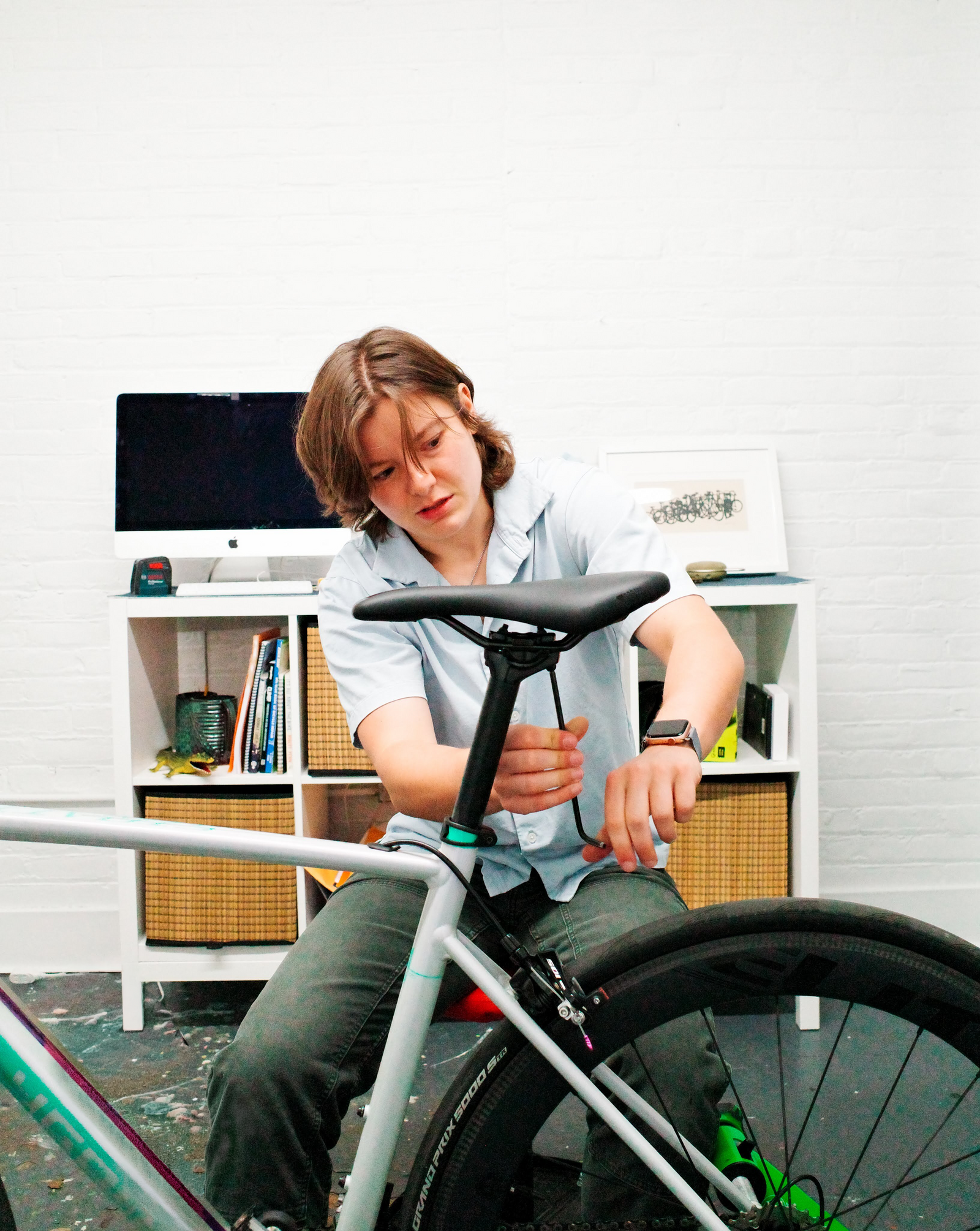
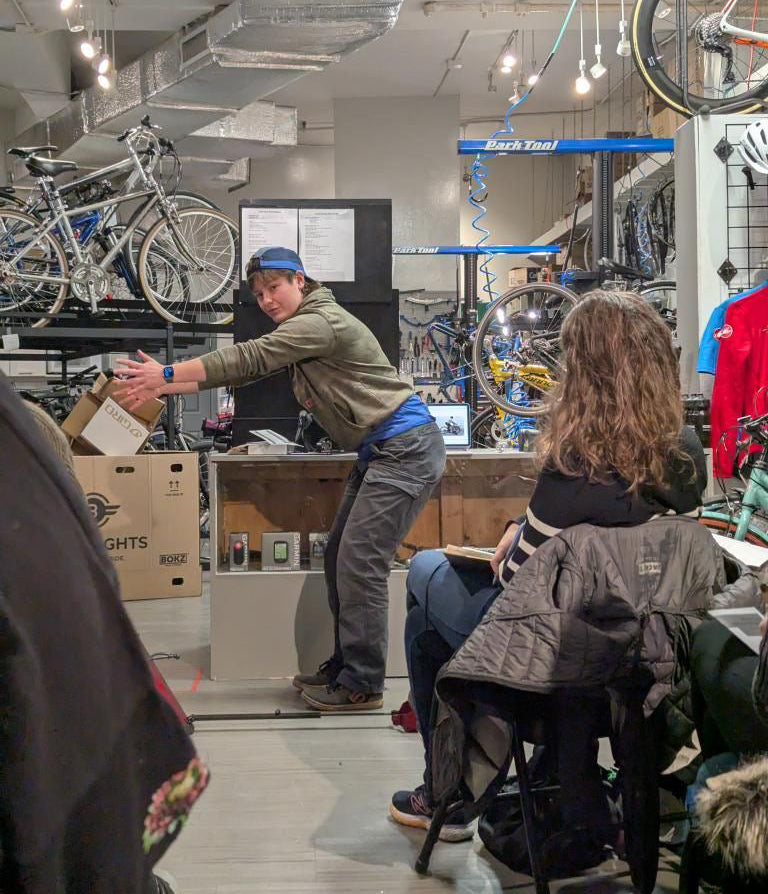
Pictured: 1. A.M. giving a bike fit demonstration. 2. All Ways Cycling Club, who work closely with A.M. 3. A.M helping a customer
Pictured: 1. A.M. giving a bike fit demonstration. 2. All Ways Cycling Club, who work closely with A.M. 3. A.M helping a customer
"As the largest WTFNB cycling club in New York City, we're grateful to have a partner in A.M. who brings in-depth knowledge and a personalized approach to every fitting with our teammates. They are hyper-focused on making sure we can all feel good on the bike, regardless of size, experience, or discipline -- and they have a deep understanding of the unique challenges and needs across the WTFNB cyclist community. Because of A.M., all.ways members are more comfortable on their bikes and set up to ride longer, get stronger, and set bigger cycling goals" -Sarah Mann, All-Ways Cycling Club
"As the largest WTFNB cycling club in New York City, we're grateful to have a partner in A.M. who brings in-depth knowledge and a personalized approach to every fitting with our teammates. They are hyper-focused on making sure we can all feel good on the bike, regardless of size, experience, or discipline -- and they have a deep understanding of the unique challenges and needs across the WTFNB cyclist community. Because of A.M., all.ways members are more comfortable on their bikes and set up to ride longer, get stronger, and set bigger cycling goals" -Sarah Mann, All-Ways Cycling Club
While these strong bonds as introduction can lead us to build thriving cycling communities, they can also mean our understanding of cycling can easily be limited by what our peers know, the quality of the bike shops near us, and how eager we are to learn via platforms like YouTube and Reddit.
Societally, we’re seeing a profusion of inclusion across fitness and recreation with growth in women’s sports, programming to build outdoor access for people across socioeconomic lines, a growing understanding of physical literacy and health at any size, and strong representation of BIPOC and LGBTQ+ athletes across sports at every level.
Three years ago as a trained management consultant, experienced physical educator and brand new bikefitter, I started trying to answer the question:
While these strong bonds as introduction can lead us to build thriving cycling communities, they can also mean our understanding of cycling can easily be limited by what our peers know, the quality of the bike shops near us, and how eager we are to learn via platforms like YouTube and Reddit.
Societally, we’re seeing a profusion of inclusion across fitness and recreation with growth in women’s sports, programming to build outdoor access for people across socioeconomic lines, a growing understanding of physical literacy and health at any size, and strong representation of BIPOC and LGBTQ+ athletes across sports at every level.
Three years ago as a trained management consultant, experienced physical educator and brand new bikefitter, I started trying to answer the question:
Why does cycling seem to lag in all of these areas?
Many bikefitters, mechanics and other industry professionals can talk you through the many structural gaps in the market. Weight limits of 220 lbs or less on bikes and componentry, road bikes sold to women without having parts proportional to their height and shoulder width, the high costs of buying, selling and servicing bikes, the default of R&D money going to aerodynamics and getting pros on the newest mode, the lack of educational marketing and development pathways for the new rider, amongst other things.
In 2023, I opened Revolutions Per Bikefit Studio, which was a natural extension of the many skills built through my nontraditional career path and came directly through my involvement in the NYC cycling scene. I was inspired by the diversity of bikes, riders, and organizations. I was stunned by all of the available ways to ride and race. As a lifelong recreational cyclist across multiple styles of riding, it shocked me how much and how quickly I was able to learn through this expansion of my access to accomplished, committed cyclists of all ilks.
Why does cycling seem to lag in all of these areas?
Many bikefitters, mechanics and other industry professionals can talk you through the many structural gaps in the market. Weight limits of 220 lbs or less on bikes and componentry, road bikes sold to women without having parts proportional to their height and shoulder width, the high costs of buying, selling and servicing bikes, the default of R&D money going to aerodynamics and getting pros on the newest mode, the lack of educational marketing and development pathways for the new rider, amongst other things.
In 2023, I opened Revolutions Per Bikefit Studio, which was a natural extension of the many skills built through my nontraditional career path and came directly through my involvement in the NYC cycling scene. I was inspired by the diversity of bikes, riders, and organizations. I was stunned by all of the available ways to ride and race. As a lifelong recreational cyclist across multiple styles of riding, it shocked me how much and how quickly I was able to learn through this expansion of my access to accomplished, committed cyclists of all ilks.

Every day, my goal is to bring that spirit into my work, allowing a historically high end, road centric profession of bikefitting to become more key as a tool for increasing education and access to our sport across disciplines. The way I see it, as more people join in on our sport, the more our industry and sport grows, which benefits all of us.
Below I’m sharing a few starting points if you’re looking to upgrade your understanding of how to ride well, minimize pain and maximize performance.
Riding Should Feel Pretty Good
This is one of the taglines I use for the business because, quite frankly, I believe riding a bicycle should feel pretty good.. While I am no stranger to the mental and physical suffering that is involved for anyone pushing their limits as they ride and race, I think it’s important to parse what good and bad suffering look like.
A trustworthy rule of thumb: pain, discomfort or numbness exclusively tied to riding is likely a bikefit issue.
Pain that travels with you throughout sports or workouts should be treated through the medical pathways.
If you’re someone who enjoys suffering or the “pain cave” while riding, think: is this muscular work? Am I rebuilding my physiology to be stronger after this ride or am I just causing physical strain? Which brings us to the following question:
Every day, my goal is to bring that spirit into my work, allowing a historically high end, road centric profession of bikefitting to become more key as a tool for increasing education and access to our sport across disciplines. The way I see it, as more people join in on our sport, the more our industry and sport grows, which benefits all of us.
Below I’m sharing a few starting points if you’re looking to upgrade your understanding of how to ride well, minimize pain and maximize performance.
Riding Should Feel Pretty Good
This is one of the taglines I use for the business because, quite frankly, I believe riding a bicycle should feel pretty good.. While I am no stranger to the mental and physical suffering that is involved for anyone pushing their limits as they ride and race, I think it’s important to parse what good and bad suffering look like.
A trustworthy rule of thumb: pain, discomfort or numbness exclusively tied to riding is likely a bikefit issue.
Pain that travels with you throughout sports or workouts should be treated through the medical pathways.
If you’re someone who enjoys suffering or the “pain cave” while riding, think: is this muscular work? Am I rebuilding my physiology to be stronger after this ride or am I just causing physical strain? Which brings us to the following question:

What is Good Form on the Bike?
In bikefitting, we’re considering not only where you are biomechanically most efficient in your setup on the bike, but where your center of mass most efficiently sits on the bike and how you are impacted by other forces like aerodynamics.
Across discipline and intensity of riding, as well as rider strength and flexibility, there are some unifying principles that are worth knowing. A detailed, specific fit should be targeted exactly to your physiology and riding style.
What is Good Form on the Bike?
In bikefitting, we’re considering not only where you are biomechanically most efficient in your setup on the bike, but where your center of mass most efficiently sits on the bike and how you are impacted by other forces like aerodynamics.
Across discipline and intensity of riding, as well as rider strength and flexibility, there are some unifying principles that are worth knowing. A detailed, specific fit should be targeted exactly to your physiology and riding style.
General good form on the bike includes:
1. Your sitpoints well supported across the widest point of the saddle, with minimal friction or chafing at the groin or thigh.
2. The knee and ball of the foot are aligned over the pedal spindle when the crank arm is parallel to the ground in front of you.
3. A slight bend (around 30 degrees) of the knee when your leg is at the bottom of the pedal stroke, extended in line with your seat tube.
4. Roughly a 90 degree angle from your torso to your hand position on the bars, with the ability to keep your shoulders in their sockets and keep a softness in your elbows.
If you feel as though you’re easily able to ride dynamically (shifting your body weight forward and bike, side to side), if your handling feels natural and easy, if you’re able to feel as though you’re “dropped into” or “one with” your bicycle - these are all great signs that you’ve found your fit!
General good form on the bike includes:
1. Your sitpoints well supported across the widest point of the saddle, with minimal friction or chafing at the groin or thigh.
2. The knee and ball of the foot are aligned over the pedal spindle when the crank arm is parallel to the ground in front of you.
3. A slight bend (around 30 degrees) of the knee when your leg is at the bottom of the pedal stroke, extended in line with your seat tube.
4. Roughly a 90 degree angle from your torso to your hand position on the bars, with the ability to keep your shoulders in their sockets and keep a softness in your elbows.
If you feel as though you’re easily able to ride dynamically (shifting your body weight forward and bike, side to side), if your handling feels natural and easy, if you’re able to feel as though you’re “dropped into” or “one with” your bicycle - these are all great signs that you’ve found your fit!






Leave a comment (all fields required)