






July 4th, 2026 | by Chris Bellamy
Chris Bellamy is the co-founder of Yanaa, an alternative to sugary sports nutrition. For this week's Quench'd story, Chris shares the story behind starting Yanaa. His own experience as an athlete struggling with health issues from improper nutrition propelled him and his business partner, Anouck, to create something different.
Chris Bellamy is the co-founder of Yanaa, an alternative to sugary sports nutrition. For this week's Quench'd story, Chris shares the story behind starting Yanaa. His own experience as an athlete struggling with health issues from improper nutrition propelled him and his business partner, Anouck, to create something different.
I grew up on a small farm in Worcestershire, a county on the edge of England next to Wales, that has somehow managed to send two very savoury and delicious foods to almost every corner of the world: Tyrrells crisps and Worcestershire sauce.
Maybe that explains something.
My childhood was full of real food. We had a huge vegetable patch, fruit trees, chickens, sheep, muddy boots by the door, and meals that came directly from the land around us. Food was the most important part of the day, and culturally important to us too. Recipes were passed down from generation to generation in a handwritten family recipe book.
Food was not abstract. It was not reduced to grams of carbohydrate, protein targets, powders, gels or packets. It had seasons, textures, smells and stories. It came from soil, weather, work and care.
I grew up on a small farm in Worcestershire, a county on the edge of England next to Wales, that has somehow managed to send two very savoury and delicious foods to almost every corner of the world: Tyrrells crisps and Worcestershire sauce.
Maybe that explains something.
My childhood was full of real food. We had a huge vegetable patch, fruit trees, chickens, sheep, muddy boots by the door, and meals that came directly from the land around us. Food was the most important part of the day, and culturally important to us too. Recipes were passed down from generation to generation in a handwritten family recipe book.
Food was not abstract. It was not reduced to grams of carbohydrate, protein targets, powders, gels or packets. It had seasons, textures, smells and stories. It came from soil, weather, work and care.
Then I became an athlete.
First rowing, then triathlon, then ultra running. Like many endurance athletes, I entered sports nutrition through the usual door: sweet energy gels, bars, drink mixes, chews and powders. I was told to treat my body like a machine. At the time, I was studying engineering at the University of Cambridge, so simplifying the body into an equation felt completely natural. Energy in, performance out. Carbohydrates for fuel, protein for recovery. Simple.
But by around 2014, my body was starting to send a very different message.
I had dental problems. Serious ones. When I moved to Canada in 2015, the dentists knew immediately that I was an athlete when they found 15 cavities in my teeth. I joked that British dentists were not the best, but the truth was more uncomfortable. I had spent years bathing my teeth in sugar during training and racing.
Then I became an athlete.
First rowing, then triathlon, then ultra running. Like many endurance athletes, I entered sports nutrition through the usual door: sweet energy gels, bars, drink mixes, chews and powders. I was told to treat my body like a machine. At the time, I was studying engineering at the University of Cambridge, so simplifying the body into an equation felt completely natural. Energy in, performance out. Carbohydrates for fuel, protein for recovery. Simple.
But by around 2014, my body was starting to send a very different message.
I had dental problems. Serious ones. When I moved to Canada in 2015, the dentists knew immediately that I was an athlete when they found 15 cavities in my teeth. I joked that British dentists were not the best, but the truth was more uncomfortable. I had spent years bathing my teeth in sugar during training and racing.
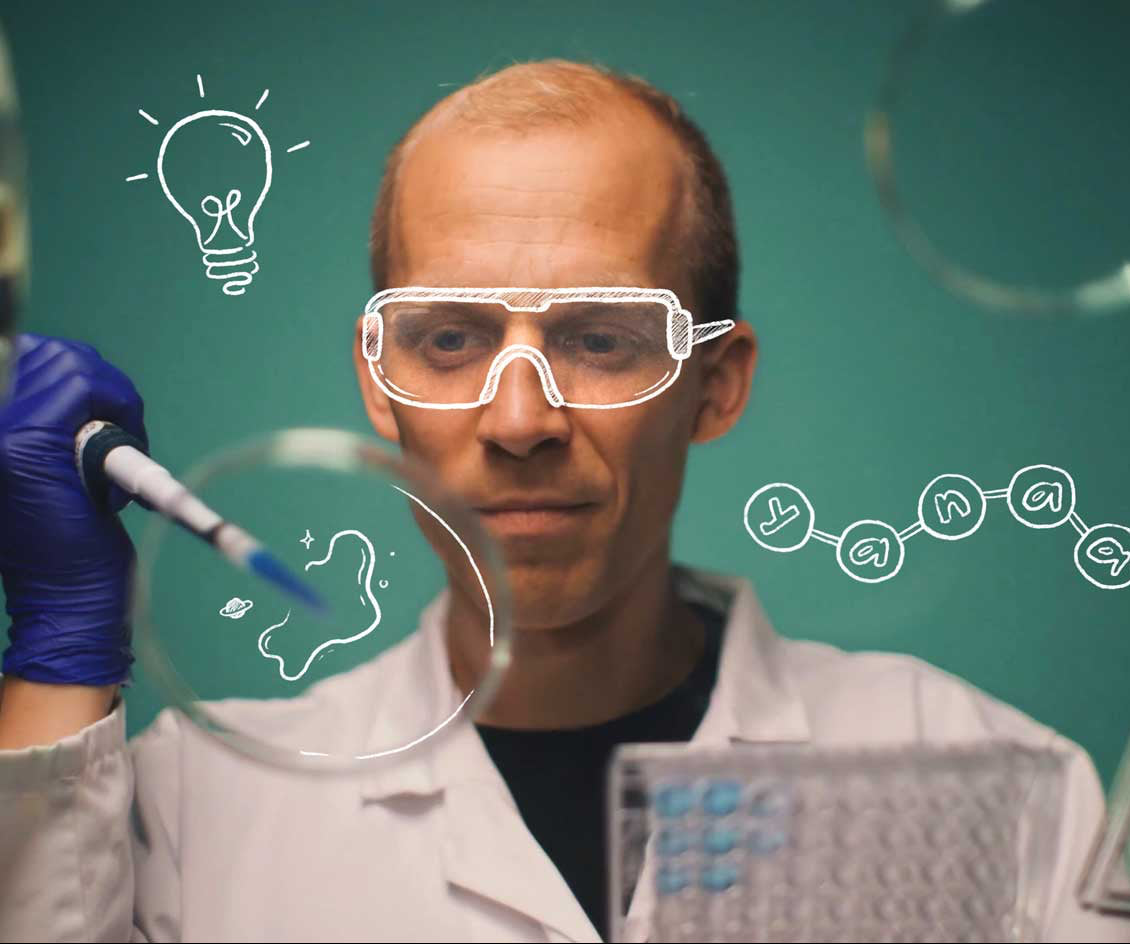

I later discovered that this was not just my problem. At the London 2012 Olympic Games, 55% of athletes seen in the dental clinic had dental cavities. Many reported that oral health affected their wellbeing, and 18% said it impacted their training or performance. That statistic stopped me in my tracks. These were some of the best athletes in the world, yet the fuel culture around sport was quietly damaging their health.
My gut was suffering too. Not mild discomfort. Race-ending, dignity-destroying digestive problems. I lost so many triathlons because I had to stop to go to the toilet — and sometimes, when there wasn’t a toilet available, even worse.
Again, I thought this was just part of endurance sport. It turns out that gastrointestinal symptoms are incredibly common in endurance athletes, with research suggesting around 30–50% prevalence overall, and far higher rates in ultra-endurance events. When you combine repeated high-intensity exercise with a diet high in sugary or ultra-processed foods, you can put enormous stress on the gut barrier, the microbiome and the whole digestive system.
Then there was my blood sugar. I became hyper-reactive to sugar. If I accidentally ate a doughnut, I would crash so hard I had to go to bed. I was peeing constantly. Eventually, I realised I was becoming pre-diabetic. Around the same time, my godfather — a doctor and keen cyclist — experienced something very similar. We had both spent years believing that sweet, synthetic sports nutrition was simply the price of performance. Instead, it seemed to be undermining our health.
I later discovered that this was not just my problem. At the London 2012 Olympic Games, 55% of athletes seen in the dental clinic had dental cavities. Many reported that oral health affected their wellbeing, and 18% said it impacted their training or performance. That statistic stopped me in my tracks. These were some of the best athletes in the world, yet the fuel culture around sport was quietly damaging their health.
My gut was suffering too. Not mild discomfort. Race-ending, dignity-destroying digestive problems. I lost so many triathlons because I had to stop to go to the toilet — and sometimes, when there wasn’t a toilet available, even worse.
Again, I thought this was just part of endurance sport. It turns out that gastrointestinal symptoms are incredibly common in endurance athletes, with research suggesting around 30–50% prevalence overall, and far higher rates in ultra-endurance events. When you combine repeated high-intensity exercise with a diet high in sugary or ultra-processed foods, you can put enormous stress on the gut barrier, the microbiome and the whole digestive system.
Then there was my blood sugar. I became hyper-reactive to sugar. If I accidentally ate a doughnut, I would crash so hard I had to go to bed. I was peeing constantly. Eventually, I realised I was becoming pre-diabetic. Around the same time, my godfather — a doctor and keen cyclist — experienced something very similar. We had both spent years believing that sweet, synthetic sports nutrition was simply the price of performance. Instead, it seemed to be undermining our health.
That was my turning point.
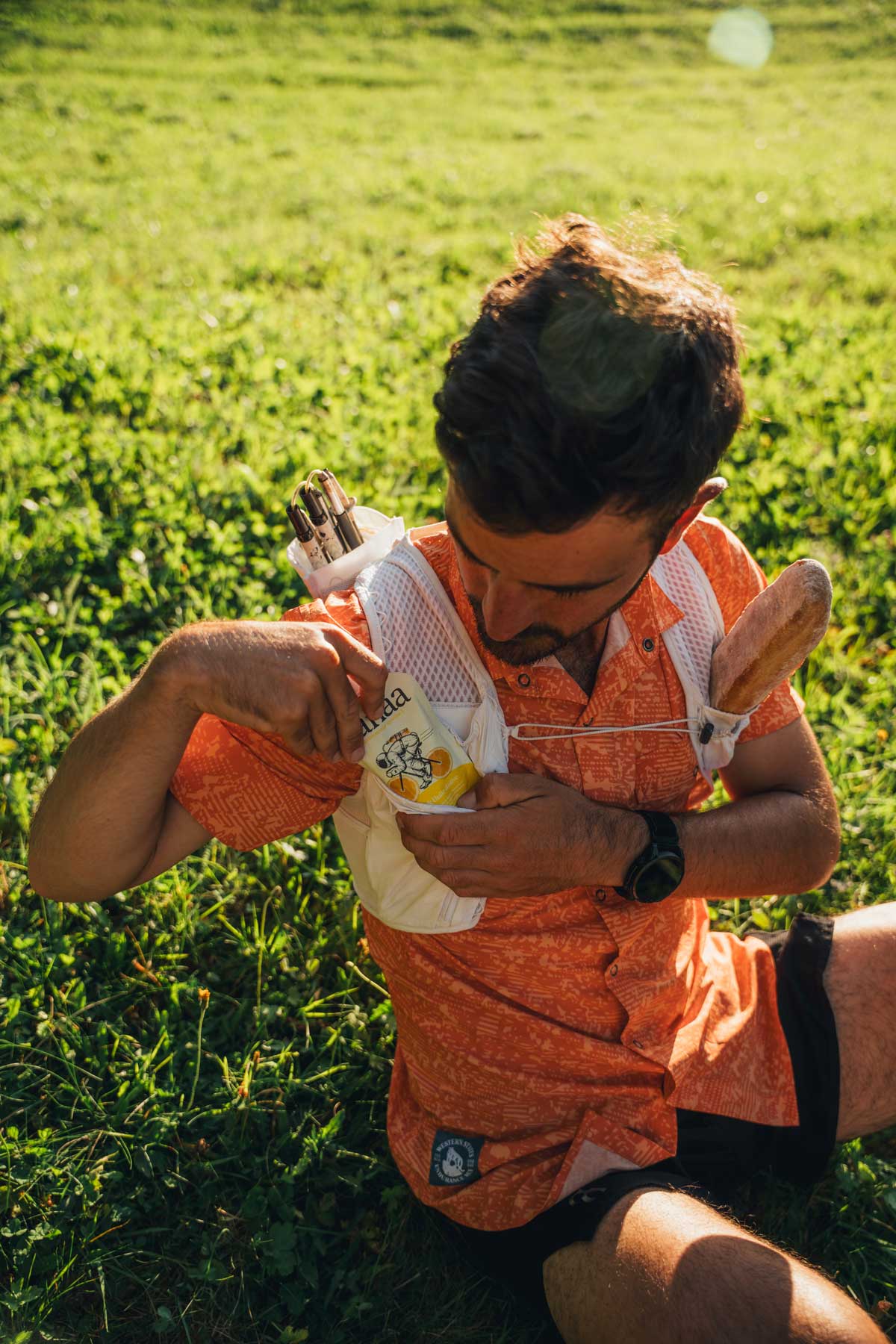
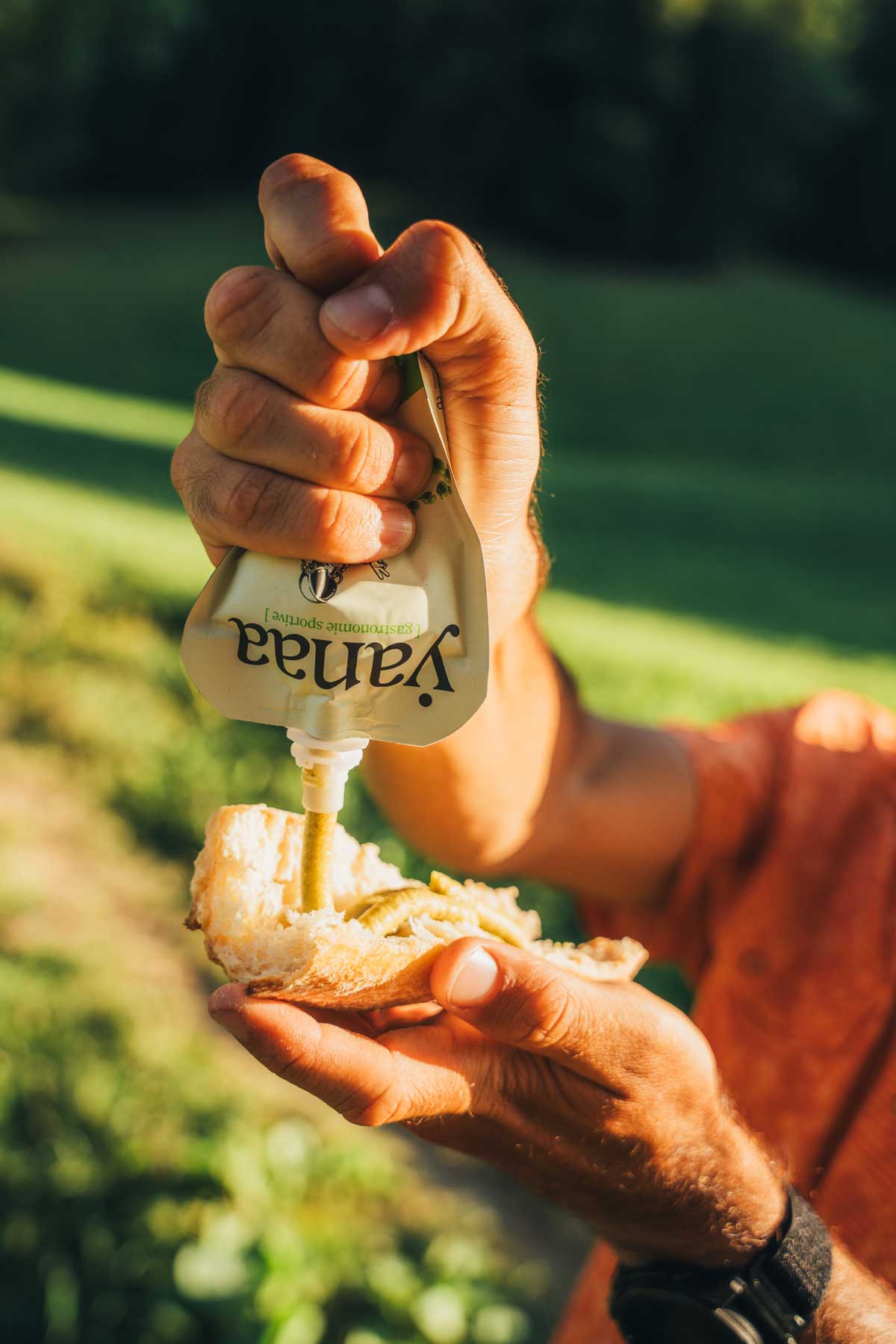
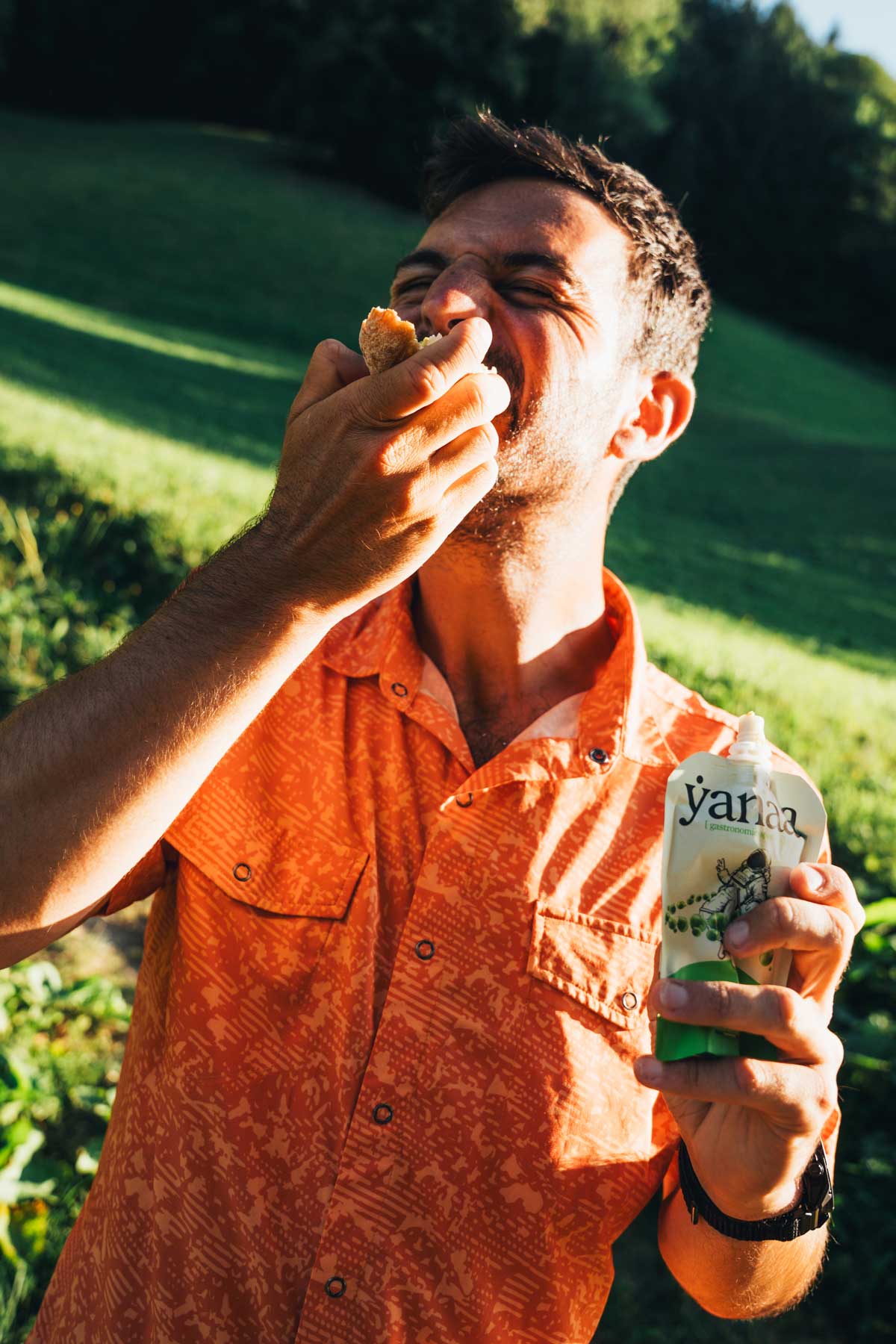
I began moving away from ultra-processed sports nutrition and started eating real food again. The change was enormous. My energy became more stable. My digestion improved. My health improved. My relationship with food changed. And, importantly, my performance improved too.
This is something I think the sports nutrition industry often gets wrong: performance is not separate from health. Health is the foundation of performance. If your gut is inflamed, your teeth are suffering, your metabolism is unstable and you dread eating during long efforts, then your fuelling strategy is not working — even if the carbohydrate numbers look perfect on paper.
Around that time, I became obsessed with Feed Zone Portables, the book by Biju Thomas and Dr. Allen Lim. Making rice balls and little frittatas for my rides felt like a revelation. This was endurance fuel that looked and tasted like food. It was salty, satisfying, nourishing and human. For the first time in years, I felt like I was fuelling myself as a person, not as a machine.
The problem was time.
I was busy: training, working, travelling, building a career. Making rice cakes before every ride was dreamy in theory, but unrealistic in practice. I started thinking about making a proper real-food sports nutrition product: something portable, savoury, delicious and designed for endurance athletes.
My first attempt was a butternut squash bar. It was a catastrophe.
That was my turning point.
I began moving away from ultra-processed sports nutrition and started eating real food again. The change was enormous. My energy became more stable. My digestion improved. My health improved. My relationship with food changed. And, importantly, my performance improved too.
This is something I think the sports nutrition industry often gets wrong: performance is not separate from health. Health is the foundation of performance. If your gut is inflamed, your teeth are suffering, your metabolism is unstable and you dread eating during long efforts, then your fuelling strategy is not working — even if the carbohydrate numbers look perfect on paper.
Around that time, I became obsessed with Feed Zone Portables, the book by Biju Thomas and Dr. Allen Lim. Making rice balls and little frittatas for my rides felt like a revelation. This was endurance fuel that looked and tasted like food. It was salty, satisfying, nourishing and human. For the first time in years, I felt like I was fuelling myself as a person, not as a machine.
The problem was time.
I was busy: training, working, travelling, building a career. Making rice cakes before every ride was dreamy in theory, but unrealistic in practice. I started thinking about making a proper real-food sports nutrition product: something portable, savoury, delicious and designed for endurance athletes.
My first attempt was a butternut squash bar. It was a catastrophe.
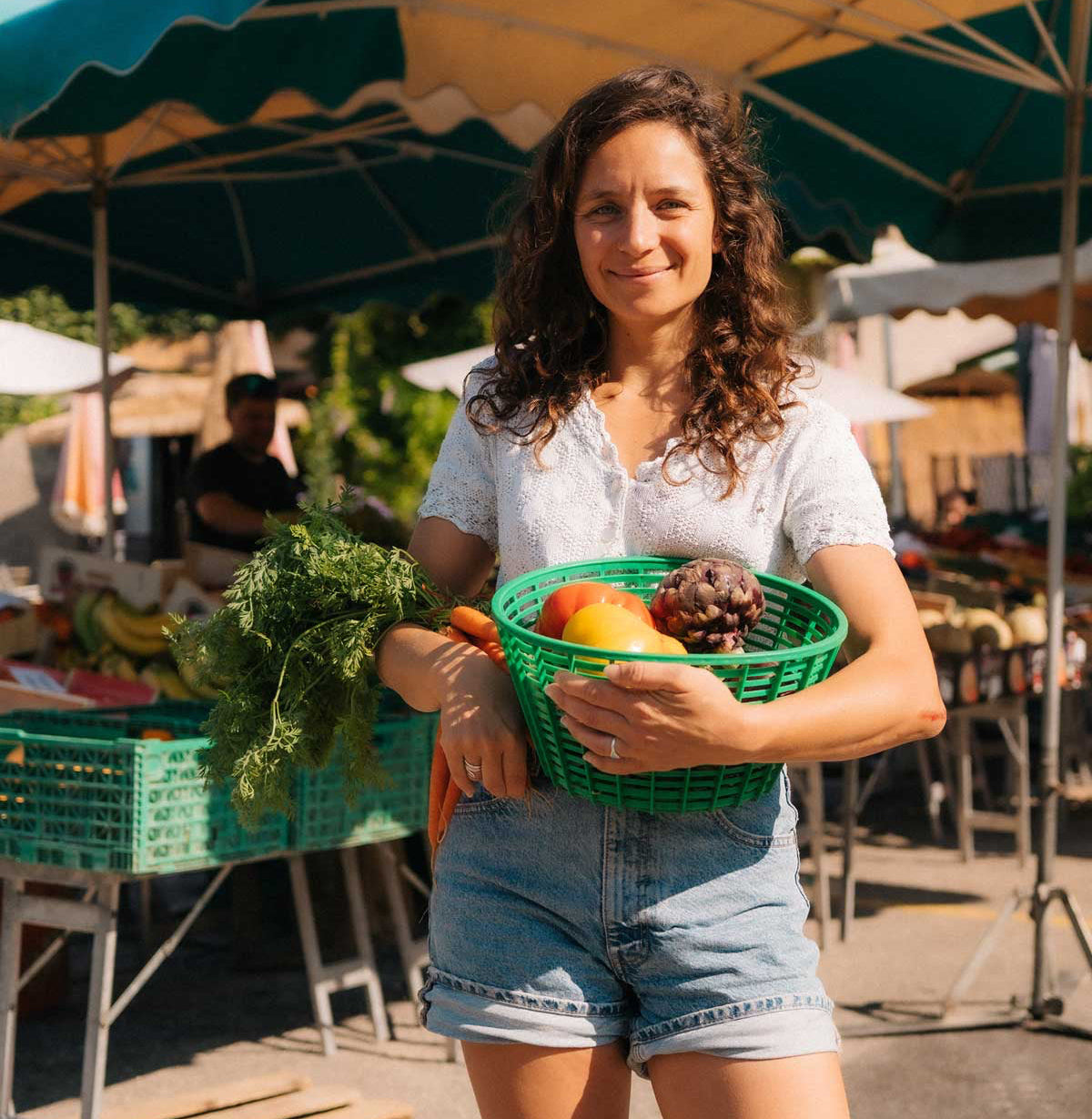

Then, five years later, in 2020, I met my co-founder, Anouck Grau.
Anouck is a former professional snowboarder turned chef and nutritionist. When we met, she was cooking for one of the best mountain bike teams in the world. She understood elite sport, but she also understood food in a way that felt completely different from conventional sports nutrition. For her, food was about performance, yes, but also flavour, digestion, pleasure, motivation and long-term health.
One day we went for a bike ride together. Anouck was in charge of the snacks, of course. Somewhere along the way, she pulled out a zip-lock bag full of homemade hummus.
It was heavenly.
It was savoury. It was real. It had texture, salt, fat, protein, carbohydrates and flavour. It made sense to my body immediately. That day, somewhere between the bike ride and the hummus, we decided we had to do something.
A few years later, we launched Yanaa.
Then, five years later, in 2020, I met my co-founder, Anouck Grau.
Anouck is a former professional snowboarder turned chef and nutritionist. When we met, she was cooking for one of the best mountain bike teams in the world. She understood elite sport, but she also understood food in a way that felt completely different from conventional sports nutrition. For her, food was about performance, yes, but also flavour, digestion, pleasure, motivation and long-term health.
One day we went for a bike ride together. Anouck was in charge of the snacks, of course. Somewhere along the way, she pulled out a zip-lock bag full of homemade hummus.
It was heavenly.
It was savoury. It was real. It had texture, salt, fat, protein, carbohydrates and flavour. It made sense to my body immediately. That day, somewhere between the bike ride and the hummus, we decided we had to do something.
A few years later, we launched Yanaa.
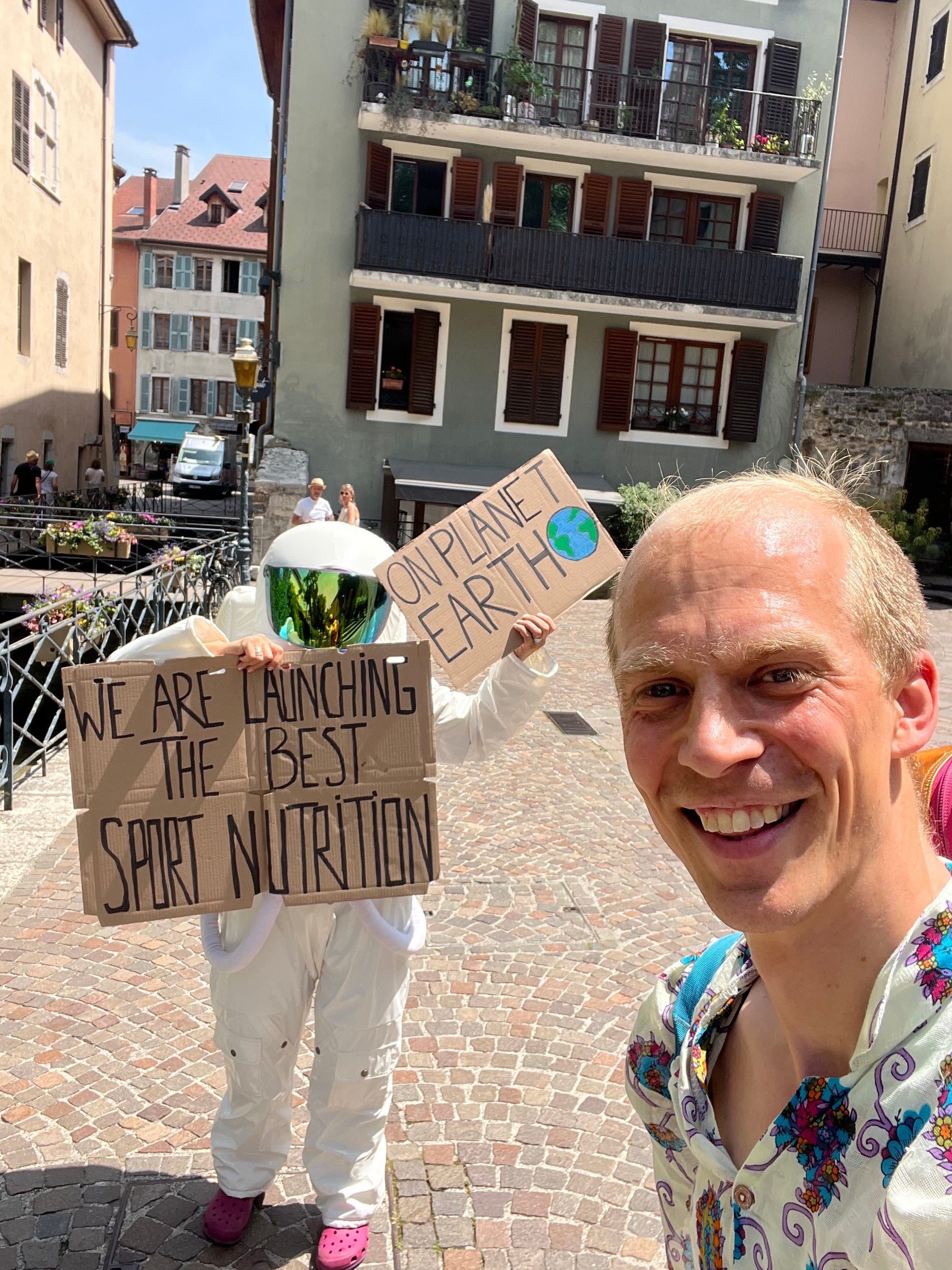
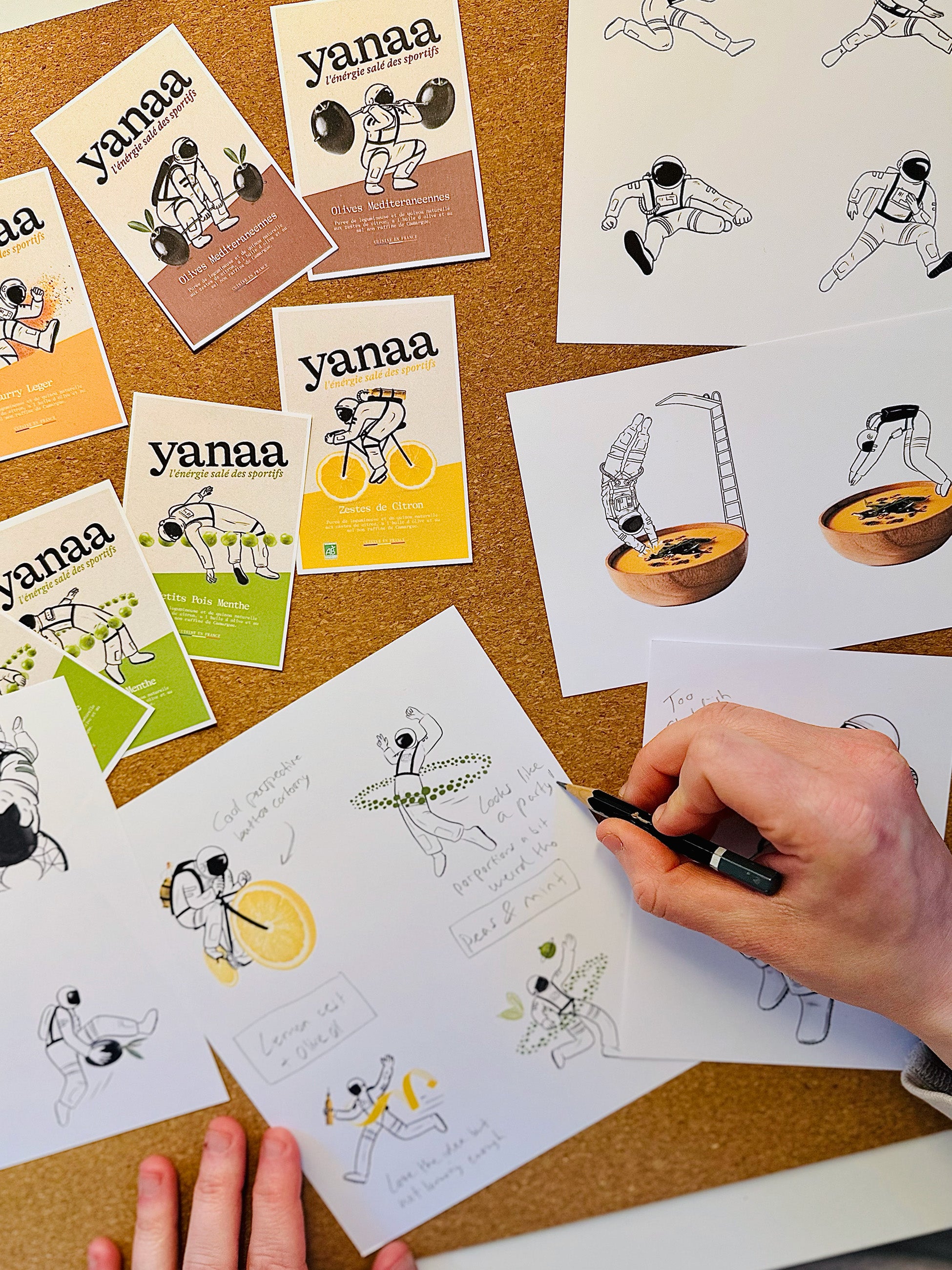
Yanaa stands for “You Are Not An Astronaut.” The name started as a joke, but it contains the whole idea. We think athletes should not have to eat space food. We also think we should not take ourselves too seriously, and that we need to look after this planet - the one we are actually exploring.
Yanaa is a response to a sports nutrition culture that has become too sterile, too elite, too masculine, too sweet, too synthetic and too reductionist.
We are humans, not machines.
My understanding of nutrition and my professional career have followed a similar path: from reductionism to ecological thinking. I started my career in engineering, simplifying complex systems into equations. I worked on electric cars, shoe biomechanics and recyclable footwear. I loved the rigour and simplicity of it, but over time I realised something important: rationally perfect products are not enough.
We made electric cars, and people drove them like go-karts. We designed recyclable shoes, and people did not return them for recycling. I kept making technically brilliant products that failed because the emotional, cultural and behavioural layers had been forgotten.
Yanaa stands for “You Are Not An Astronaut.” The name started as a joke, but it contains the whole idea. We think athletes should not have to eat space food. We also think we should not take ourselves too seriously, and that we need to look after this planet - the one we are actually exploring.
Yanaa is a response to a sports nutrition culture that has become too sterile, too elite, too masculine, too sweet, too synthetic and too reductionist.
We are humans, not machines.
My understanding of nutrition and my professional career have followed a similar path: from reductionism to ecological thinking. I started my career in engineering, simplifying complex systems into equations. I worked on electric cars, shoe biomechanics and recyclable footwear. I loved the rigour and simplicity of it, but over time I realised something important: rationally perfect products are not enough.
We made electric cars, and people drove them like go-karts. We designed recyclable shoes, and people did not return them for recycling. I kept making technically brilliant products that failed because the emotional, cultural and behavioural layers had been forgotten.
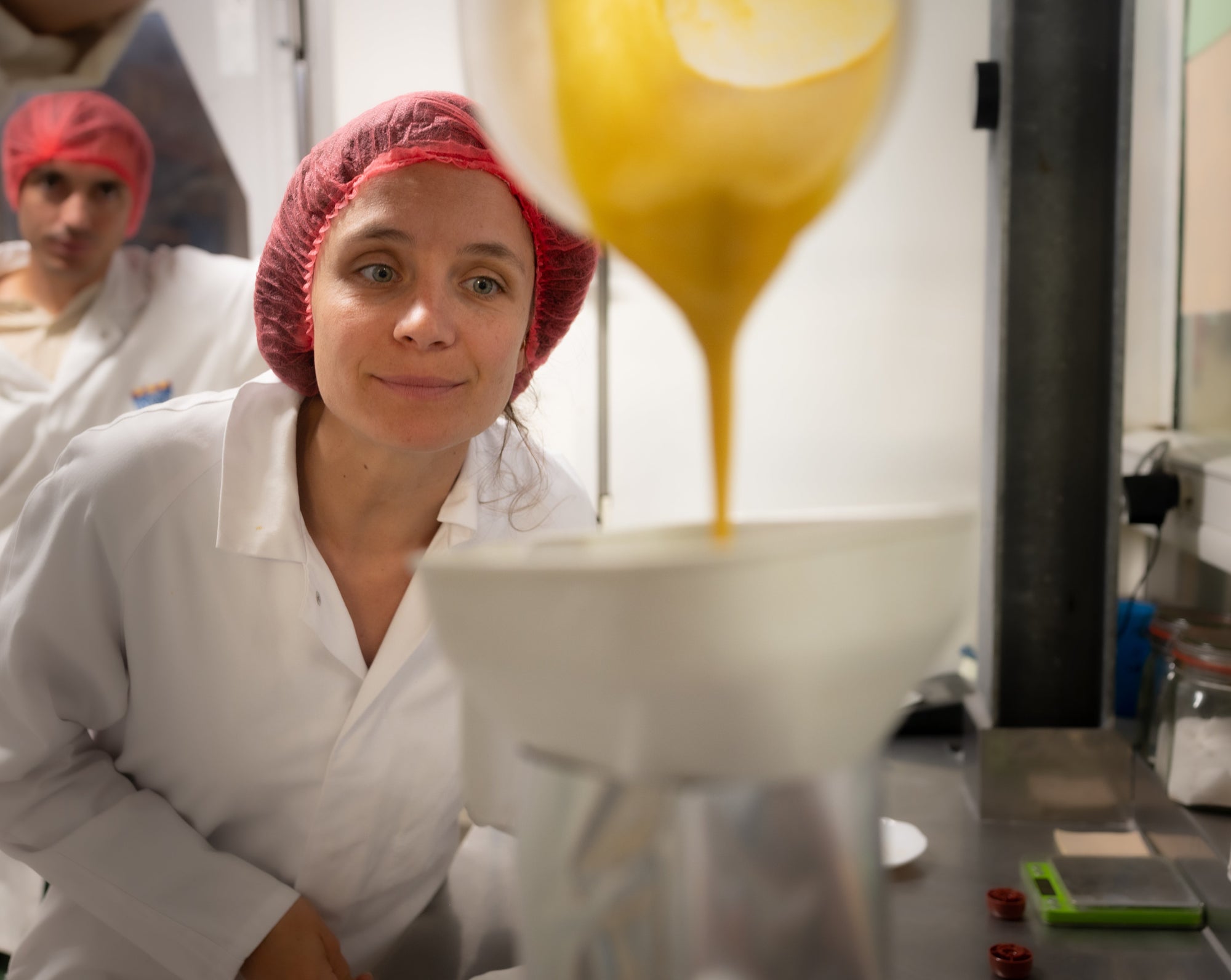
At the same time, my approach to nutrition changed in the same direction. I moved away from reductionist sugary sports nutrition and towards systemic real-food nutrition. Because athletes are not engines. We are ecosystems.
Macronutrients matter. Carbohydrates, proteins and fats are essential. But they are not the whole story. The microbiome is essential for digestion, nutrient absorption, immune function, inflammation regulation and even the gut-brain axis. Metabolic health and metabolic flexibility - the ability to use different fuel sources depending on intensity and duration - are crucial for endurance athletes. Micronutrients matter too: vitamins, minerals, polyphenols, antioxidants and fibre support energy production, oxygen transport, muscle function, immunity, recovery and long-term resilience.
This is the philosophy behind Yanaa. We want to challenge the bizarre paradox that many people do sport for health, joy and connection to the outdoors, then fuel that sport with products that may be among the worst things for their long-term health - and often taste disgusting too. In a university study we conducted in 2023, we surveyed 592 athletes and found that three quarters of them thought sports nutrition was unhealthy, disgusting to eat, and wanted more savoury options.
We are not anti-carbohydrate. We are not anti-science. There are moments when sweet gels or drink mixes can be useful. But we reject the idea that endurance athletes should rely almost entirely on ultra-processed, sweet, synthetic products to perform. Real foods have an important role to play, especially during training, long races and adventures where digestion, variety, appetite and enjoyment become essential.
At the same time, my approach to nutrition changed in the same direction. I moved away from reductionist sugary sports nutrition and towards systemic real-food nutrition. Because athletes are not engines. We are ecosystems.
Macronutrients matter. Carbohydrates, proteins and fats are essential. But they are not the whole story. The microbiome is essential for digestion, nutrient absorption, immune function, inflammation regulation and even the gut-brain axis. Metabolic health and metabolic flexibility - the ability to use different fuel sources depending on intensity and duration - are crucial for endurance athletes. Micronutrients matter too: vitamins, minerals, polyphenols, antioxidants and fibre support energy production, oxygen transport, muscle function, immunity, recovery and long-term resilience.
This is the philosophy behind Yanaa. We want to challenge the bizarre paradox that many people do sport for health, joy and connection to the outdoors, then fuel that sport with products that may be among the worst things for their long-term health - and often taste disgusting too. In a university study we conducted in 2023, we surveyed 592 athletes and found that three quarters of them thought sports nutrition was unhealthy, disgusting to eat, and wanted more savoury options.
We are not anti-carbohydrate. We are not anti-science. There are moments when sweet gels or drink mixes can be useful. But we reject the idea that endurance athletes should rely almost entirely on ultra-processed, sweet, synthetic products to perform. Real foods have an important role to play, especially during training, long races and adventures where digestion, variety, appetite and enjoyment become essential.
Recently, Yanaa supported a scientific review with HumanFab, a research laboratory in France specialising in human health and performance. The review examined 270 published studies and concluded that a “food-first but not food-only” approach is the preferred strategy for athletes. In other words: real food should form the foundation of both daily eating and fueling during exercise, while sports nutrition products should be used as supplements when they provide a clear benefit.
The review also found that real foods can provide comparable performance and recovery to synthetic sports nutrition products. Studies have shown athletes performing as well with foods such as raisins, potato purée or bananas as with commercial gels, chews or carbohydrate drinks. The difference is that real foods also bring fibre, micronutrients and bioactive compounds that support long-term health - things many industrial sports products simply do not provide.
I saw this food-first philosophy again while volunteering at the Paris Olympics in 2024. I did not see athletes constantly eating protein bars or energy gels. When I asked team nutritionists why, they told me that the latest approach is to prioritise real food wherever possible, then use supplements strategically when the context genuinely requires them.
The International Olympic Committee had already made a similar point back in 2018, advising athletes to treat supplements and synthetic sports nutrition products with caution, and to consider them only after a proper risk-benefit analysis. I’m not sure how many four-hour marathon runners smashing gel after gel have read that guidance - but I have a gut feeling it’s not many.
Recently, Yanaa supported a scientific review with HumanFab, a research laboratory in France specialising in human health and performance. The review examined 270 published studies and concluded that a “food-first but not food-only” approach is the preferred strategy for athletes. In other words: real food should form the foundation of both daily eating and fueling during exercise, while sports nutrition products should be used as supplements when they provide a clear benefit.
The review also found that real foods can provide comparable performance and recovery to synthetic sports nutrition products. Studies have shown athletes performing as well with foods such as raisins, potato purée or bananas as with commercial gels, chews or carbohydrate drinks. The difference is that real foods also bring fibre, micronutrients and bioactive compounds that support long-term health - things many industrial sports products simply do not provide.
I saw this food-first philosophy again while volunteering at the Paris Olympics in 2024. I did not see athletes constantly eating protein bars or energy gels. When I asked team nutritionists why, they told me that the latest approach is to prioritise real food wherever possible, then use supplements strategically when the context genuinely requires them.
The International Olympic Committee had already made a similar point back in 2018, advising athletes to treat supplements and synthetic sports nutrition products with caution, and to consider them only after a proper risk-benefit analysis. I’m not sure how many four-hour marathon runners smashing gel after gel have read that guidance - but I have a gut feeling it’s not many.
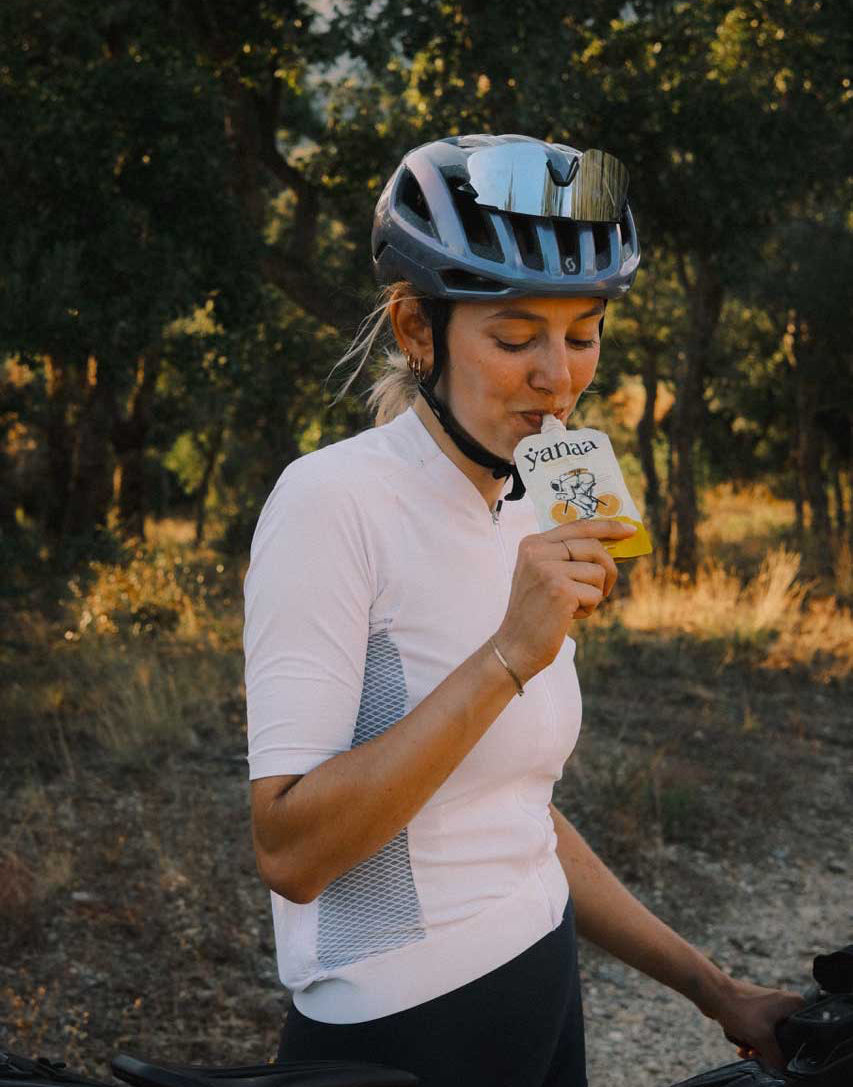

That is exactly where I think sports nutrition needs to go.
Not away from science, but towards better science. Not away from performance, but towards performance built on health. Not away from convenience, but towards convenience that does not disconnect us from real ingredients, real cooking and real bodies.
We launched Yanaa to challenge a category that often packs cheap sugar into plastic wrappers and tells athletes to eat like machines. We want to bring flavour, savoury food, organic ingredients and ecological thinking back into endurance fuel.
But it is also about more than performance.
We want to encourage people to explore this planet with the same joy, curiosity, care and wonder with which we might explore another one. While the media talks about colonising Mars, and trail running becomes increasingly commercialised, we want to create something that gently pushes in the opposite direction.
Chris Bellamy
Co-founder of Yanaa
That is exactly where I think sports nutrition needs to go.
Not away from science, but towards better science. Not away from performance, but towards performance built on health. Not away from convenience, but towards convenience that does not disconnect us from real ingredients, real cooking and real bodies.
We launched Yanaa to challenge a category that often packs cheap sugar into plastic wrappers and tells athletes to eat like machines. We want to bring flavour, savoury food, organic ingredients and ecological thinking back into endurance fuel.
But it is also about more than performance.
We want to encourage people to explore this planet with the same joy, curiosity, care and wonder with which we might explore another one. While the media talks about colonising Mars, and trail running becomes increasingly commercialised, we want to create something that gently pushes in the opposite direction.
Chris Bellamy
Co-founder of Yanaa







Harry Black
August 05, 2026
I am not an endurance athlete myself. This sounds like a great research opportunity for creating a really strong foundation to health for athletes.
Have you considered honey. There is a weird thing about honey when you consume it, the ph in mouth spikes then suddenly drops back to normal. This could be a critical natural ingredient to provide the sugars without the cavities.
I don’t know much about the properties of honey, although worth looking into.
Best.